Is PRP Therapy Worth It? Cost, Insurance, and What the Evidence Shows
If you’ve been quoted a few hundred to well over a thousand dollars for a platelet-rich plasma (PRP) injection — and told insurance won’t pay a cent — it’s fair to ask a blunt question: is this actually worth it? PRP is one of the most talked-about regenerative treatments for joint and tendon pain, but it isn’t right for everyone, and the evidence is stronger for some problems than others. At Empire Minimally Invasive Spine and Pain, we offer PRP as a cash-pay option across our New York and New Jersey offices, so we’d rather give you a straight answer up front than a sales pitch. Here’s what PRP can and can’t do, why it costs what it costs, and how to decide.
Key takeaways
- PRP uses a concentrated dose of your own platelets to support healing. It doesn’t regrow cartilage or cure arthritis.
- The evidence is strongest for tennis elbow and mild-to-moderate knee osteoarthritis, and weaker or mixed for problems like rotator cuff repair and Achilles tendinitis.
- Most insurance plans treat PRP as investigational and don’t cover it, so it’s usually paid out of pocket.
- Cost varies widely — often several hundred to more than a thousand dollars per session.
- PRP is worth considering when the evidence and your specific case line up. We’ll tell you honestly if it doesn’t.
On this page
- What is PRP therapy, and how does it work?
- Where does PRP actually work best?
- Is PRP therapy worth the money?
- Why doesn’t insurance cover PRP injections?
- How much does a PRP injection cost out of pocket?
- What happens during PRP treatment, and what’s recovery like?
- Who is (and isn’t) a good candidate for PRP?
- Frequently asked questions
What is PRP therapy, and how does it work?
PRP therapy uses a concentrated dose of your own platelets to support healing in an injured joint or tendon. We draw a small sample of your blood, spin it in a centrifuge to separate out the platelets, and inject that concentrated plasma into the sore area — often with ultrasound guidance for accuracy. A PRP injection can hold five to ten times as many platelets as normal blood.
Why platelets? They release growth factors, the signals your body already uses to repair tissue. The idea behind PRP is to deliver a strong dose of those signals right where you’re hurting. Because the injection is made from your own blood, the chance of an allergic reaction is very low.
Platelet-rich plasma is blood plasma with roughly five to ten times the usual platelet concentration, injected to deliver growth factors to injured tissue (Cleveland Clinic, 2024). It’s made from your own blood, so it’s a low-risk procedure. You can see how we prepare and place the injection on our PRP therapy page.
Where does PRP actually work best?
PRP is not equally useful for every ache. Current evidence points to real benefit for a couple of specific problems and much thinner support for others. According to the American Academy of Orthopaedic Surgeons, PRP is effective for chronic tendon injuries — especially tennis elbow — and a growing body of research supports it for low-to-moderate-grade knee osteoarthritis. For rotator cuff repair, ACL surgery, and fractures, studies so far show little or no benefit, and for chronic Achilles tendinitis the results are promising but not clearly better than standard care.
So the honest picture is a split one. That’s the part a lot of clinics skip.
PRP shows the strongest evidence for chronic tendon injuries such as tennis elbow and for low-to-moderate-grade knee osteoarthritis, while showing little or no added benefit for rotator cuff repair, ACL surgery, and fractures (AAOS OrthoInfo, 2026). Even where PRP helps, preparation methods aren’t standardized, so results differ from patient to patient.
Is PRP therapy worth the money?
PRP can be worth it when the evidence and your specific case line up — a mild-to-moderate arthritic knee or a stubborn case of tennis elbow that hasn’t settled with rest, therapy, or other measures. It’s less likely to be worth it for advanced, bone-on-bone arthritis or for problems where PRP hasn’t shown much benefit. The right answer depends on what’s wrong, how far along it is, and what you’ve already tried.
This is where our approach matters. Empire follows a step-up model: we start with the least invasive option that can realistically help, and only move up the ladder when simpler measures fall short. PRP sits in the middle of that ladder — a reasonable step to try before surgery for the right candidate, not a first move for every sore joint and not a substitute for a full plan. Dr. Salvatore Corso was presenting on the use of concentrated platelets to speed orthopedic healing back in 2007, well before PRP became a buzzword, and that long view is exactly why we’re careful about who we recommend it to.
Put simply: if PRP is unlikely to help your particular problem, the most valuable thing we can do is tell you that before you spend the money.
Why doesn’t insurance cover PRP injections?
Most insurance plans don’t cover PRP because they classify it as investigational or elective rather than a proven standard of care. Insurers tend to reimburse treatments backed by large, consistent, standardized trials. PRP doesn’t fit that box yet: the research is still developing, and there’s no single agreed-upon recipe for preparing the injection, which makes results harder to compare across studies.
That’s not the same as saying PRP doesn’t work. It means the insurance industry hasn’t accepted it as standard, so the cost usually lands on the patient.
Few insurance plans — including workers’ compensation plans — provide even partial reimbursement for PRP (AAOS OrthoInfo, 2026). Because PRP preparation isn’t standardized and the research is still evolving, most payers treat it as investigational. Always confirm your own coverage before scheduling.
How much does a PRP injection cost out of pocket?
There’s no single price for a PRP injection. Because insurance rarely helps, you’re usually paying the full amount yourself, and it often runs from several hundred to more than a thousand dollars per session. What drives the range? The joint or tendon being treated, how the plasma is prepared, whether ultrasound guidance is used, your region, and how many injections your plan calls for.
PRP is relatively expensive largely because of the process involved in producing it — the blood draw, the centrifuge preparation, and the guided injection all happen in one visit. Since some patients need a short series rather than a single shot, it’s smart to ask about the total cost of a full course, not just one injection, before you commit. At Empire, we give you an exact price up front so there are no surprises.
What happens during PRP treatment, and what’s recovery like?
A PRP visit is a straightforward in-office procedure that usually takes about an hour. We draw a small amount of blood, prepare the plasma while you wait, and inject it into the target area, often using ultrasound to place it precisely. You go home the same day.
Recovery is gradual, not instant. It’s normal for the treated spot to feel sore or full for a day or two — sometimes the discomfort even ticks up for the first week or two before it eases. Because PRP works with your body’s own repair process, many people don’t notice a change for several weeks, and fuller effects can take a few months. When PRP does help, the benefit may last several months to a year or longer. Your physician will give you aftercare guidance for your specific joint.
A PRP injection is an in-office procedure lasting about an hour; mild soreness for a day or two is common, results build over several weeks, and full healing can take several months (Cleveland Clinic, 2024). Its overall risks appear similar to those of a routine cortisone injection.
Who is (and isn’t) a good candidate for PRP?
Good candidates usually have a problem PRP has a real shot at helping and have already tried simpler measures without enough relief. PRP tends to fit best when you want to delay or avoid surgery and are willing to give a regenerative option time to work.
PRP may be worth discussing if you have:
- Mild-to-moderate knee osteoarthritis that hasn’t responded to activity changes, therapy, or anti-inflammatory measures
- Chronic tennis elbow or another stubborn tendon problem
- A preference for an injection made from your own blood over repeated steroid shots
- A goal of postponing or avoiding surgery when that’s reasonable
PRP is less likely to help if you have:
- Advanced, bone-on-bone arthritis
- A full rotator cuff tear or other problem where PRP hasn’t shown clear benefit
- An expectation that one injection will regrow cartilage or permanently fix the joint
- A certain blood condition or active infection — your physician will review your history first
Not sure which list you’re on? That’s the exact question a consultation answers. We’ll examine the joint, review your imaging, and point you toward whatever gives you the best odds — whether that’s PRP, a different injection, or a look at whether a knee pain doctor or rotator cuff specialist should weigh in first.
Wondering if PRP is worth it for your case?
Our physicians will examine you, review your imaging, and give you an honest read on whether PRP fits your problem — plus an exact price before you decide anything. Offices across Long Island, Westchester, and New Jersey.
Request an appointmentOr call us: Orthopedics 516-400-3333 | New Jersey 732-630-7246
Frequently asked questions
Is PRP therapy worth the money?
PRP can be worth it when the evidence and your specific case line up — for example, mild-to-moderate knee osteoarthritis or chronic tennis elbow that hasn’t improved with simpler measures. It’s less likely to be worth it for advanced arthritis or for problems where PRP hasn’t shown clear benefit. A physician exam is the best way to know which applies to you.
Does insurance cover PRP injections?
Usually not. Most plans, including many workers’ compensation plans, treat PRP as investigational or elective and don’t reimburse it. That means PRP is typically paid out of pocket. Check with your own insurer, and ask our team to explain your cost before you schedule.
How much does a PRP injection cost out of pocket?
There’s no single price. Because insurance rarely covers it, PRP is often several hundred to more than a thousand dollars per session, depending on the area treated, how the plasma is prepared, and how many injections you need. Ask about the cost of a full course, not just one shot. We provide an exact quote up front.
Does PRP regrow cartilage or cure arthritis?
No. PRP does not regrow lost cartilage or reverse arthritis. Its goal is to calm inflammation and support the joint so it feels and works better. It’s a management tool for the right candidate, not a cure.
How long does PRP take to work, and how long does it last?
PRP works gradually. Many people notice changes over several weeks, and fuller effects can take a few months. When it helps, relief may last several months to a year or longer. Some patients need a short series of injections rather than a single one.

Dr. Salvatore Corso
Articles: 9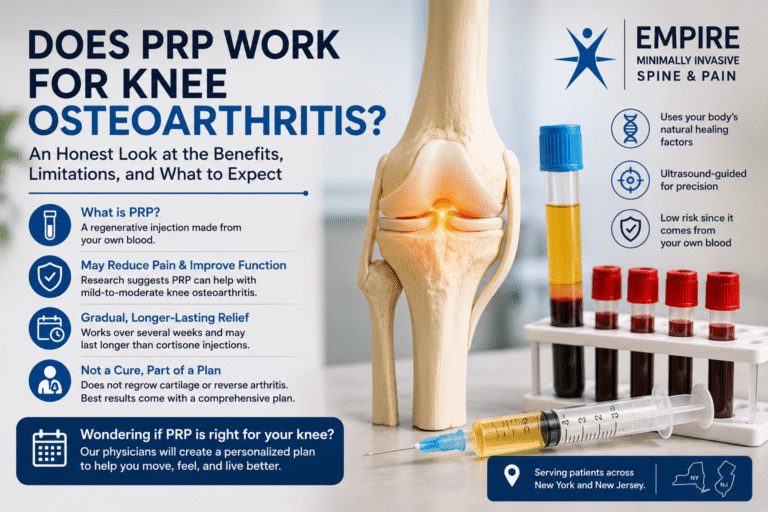
Medicare, Workers Comp,
No Fault & Others.
We accept most major insurance plans across our New York and New Jersey offices. Select your state to see accepted plans.
Accepted at our New York Locations
Workers' Compensation
No-Fault (NY & NJ)
Lien Cases
Medicare
Empire BCBS
BCBS / Anthem
Cigna
Aetna
Empire NYSHIP
Oxford (PPO)
United Health Care
GHI / Emblem Health
Humana (PPO)
Magnacare (PPO)
Northwell Direct
1199 SEIU
Self Pay
Accepted at our New Jersey Locations
No-Fault (NJ)
Lien Cases
Horizon BCBS
Empire NYSHIP
BCBS / Anthem (PPO)
Cigna
Aetna (PPO)
GHI / Emblem (PPO)
Port Authority UHC
Verizon Plan
Carpenter & Trade Unions
Self Pay
Medicare and Medicaid are not accepted at our New Jersey locations. Not sure about your plan? Call us and we'll verify before your visit.
Not sure about your plan?
Call Us — 516-229-1443
Verify Your Coverage for FREE
Enter your information and our team will confirm your benefits before your visit.
✓ HIPAA Compliant
✓ No Obligation
✓ Same-Day Response
Your information is encrypted and secure. By submitting, you consent to receive communications regarding your appointment. You may opt out at any time.
Meet Our Pain Management & Orthopedic Specialists
Board-certified physicians dedicated to accurate diagnosis and minimally invasive care.
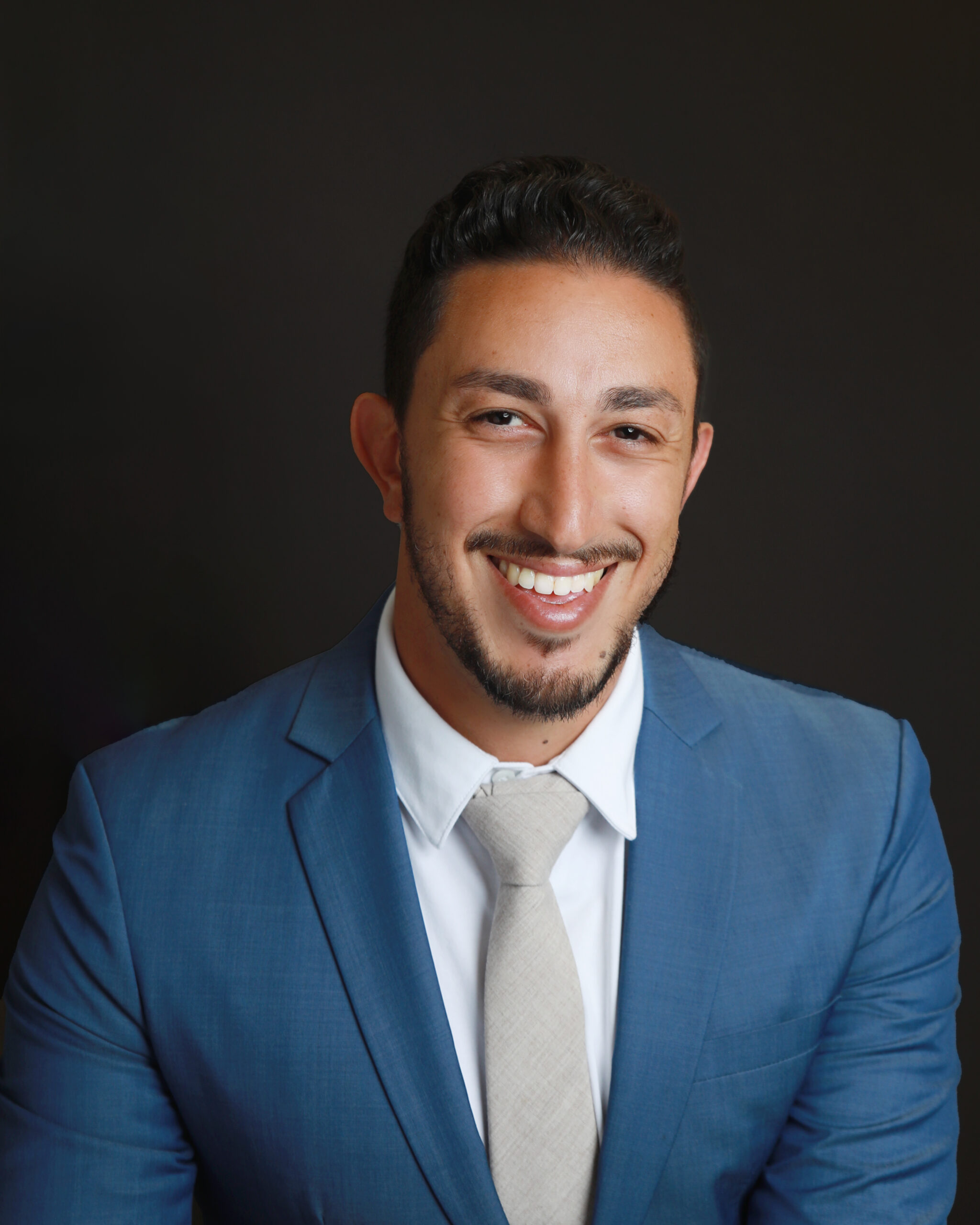
Pain Management
John Akhnoukh, M.D.
Board Certified Anesthesiologist & Interventional Pain Management Physician
Visit Profile


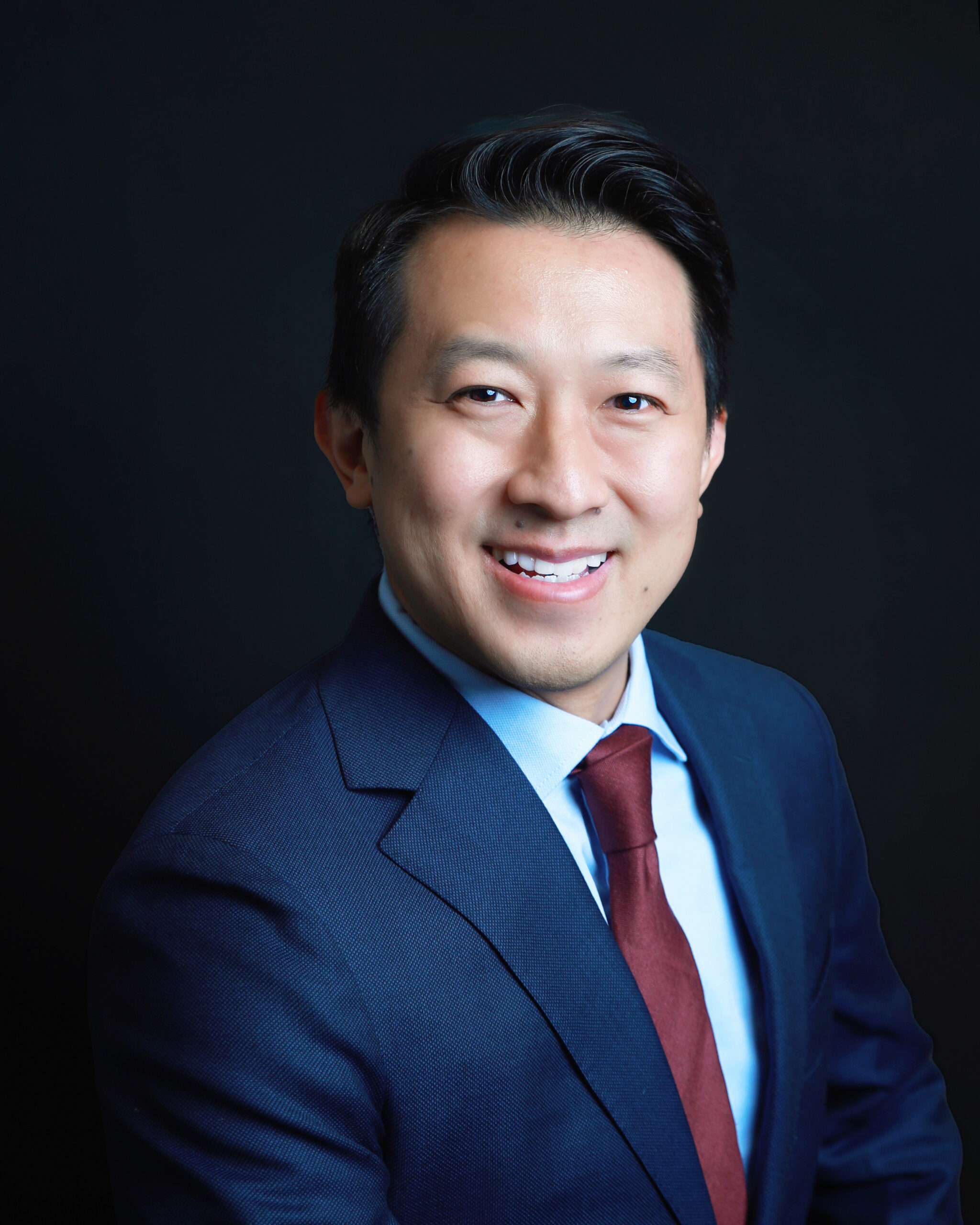
Pain Management
James Yu, D.O.
Board Certified Anesthesiologist & Interventional Pain Management Physician
Visit Profile

Pain Management
Benjamin Souferi, D.O.
Fellowship-Trained Interventional Pain Medicine Physician (Cleveland Clinic)
Visit ProfilePain Conditions Affecting Daily Life
Improve your quality of life with our comprehensive approach to pain management
We are dedicated to finding individualized treatment options tailored to fit your needs. Our team is dedicated to helping you lead a productive and active life, free from pain and disruption.
Our Locations
Pain management and orthopedic care across New York and New Jersey.