When you experience lumbar strain, it can significantly impact your ability to perform daily activities and may lead to functional limitations and decreased quality of life. Our team of orthopedic specialists begins the evaluation process with a thorough assessment of your medical history, followed by a physical examination and may utilize imaging studies such as X-rays or MRI to rule out other potential causes of your symptoms.
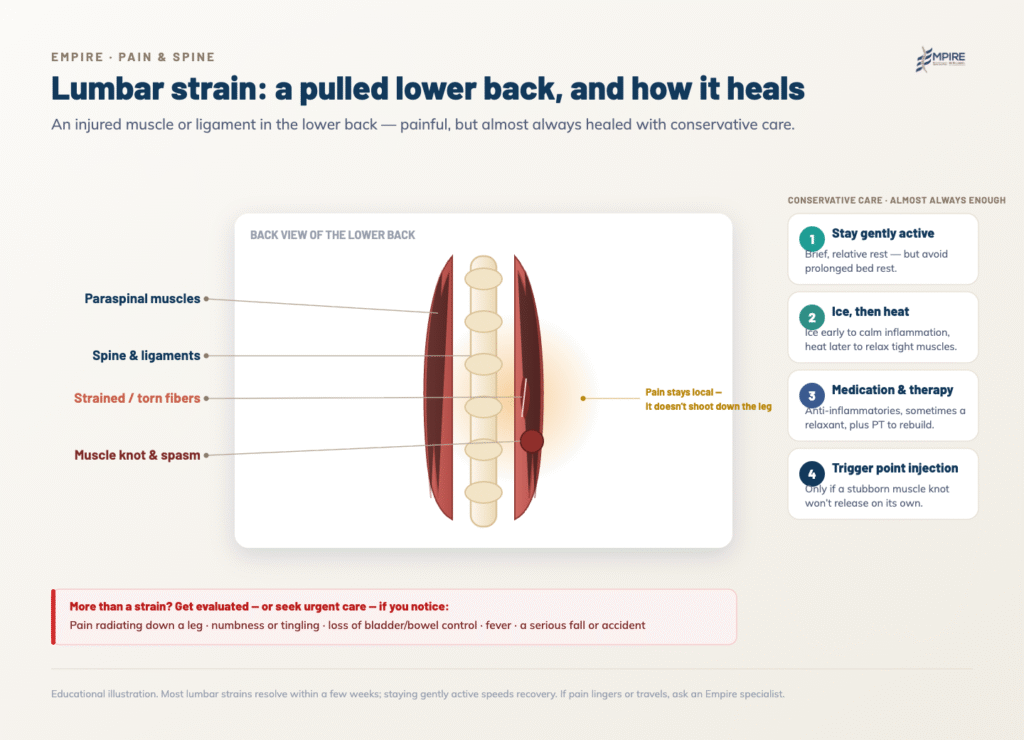
A lumbar strain — a pulled muscle or ligament in the lower back — is one of the most common causes of sudden back pain. The good news: most strains heal with the right care. Our team treats lower-back injuries across Long Island and northern New Jersey, with offices in Plainview, New Hyde Park, and Ronkonkoma, NY, and Clifton, Montville, and Plainfield, NJ.
The short version
- A lumbar strain is an injury to the muscles or ligaments of the lower back, often from lifting, twisting, or overuse.
- Typical symptoms are localized pain, stiffness, and muscle spasm — usually without pain shooting down the leg.
- Most strains improve within a few weeks with conservative care.
- If pain lingers or travels down a leg, it may be more than a strain and worth evaluating.
What a lumbar strain is
A lumbar strain happens when the muscles or ligaments supporting your lower back are stretched or torn — commonly from a sudden movement, heavy or awkward lifting, poor posture, or repetitive activity that overloads the area. The result is localized lower-back pain, stiffness, muscle spasms, and difficulty moving comfortably.
Unlike nerve-related back problems, a strain usually stays in the back itself and doesn’t send pain, numbness, or tingling down the leg. That distinction matters, because it points toward a different, simpler treatment path.
Lumbar strain symptoms
A lumbar strain usually causes:
- Pain and stiffness in the low back that gets worse when you move, bend, or lift
- Muscle spasms or cramping, with activity or at rest
- Reduced range of motion, such as trouble standing up straight
- Pain that stays in the low back and buttock area rather than traveling down the leg
Pain that shoots below the knee, or comes with numbness, tingling, or weakness in the leg, points to an irritated nerve rather than a simple strain.
What causes a lumbar strain?
A lumbar strain happens when the muscles or tendons of the low back are overstretched or torn. Common triggers include lifting something heavy with poor form, twisting while lifting, a sudden awkward movement or fall, and repeated strain from sports or physical work. The low back is especially vulnerable because it carries the weight of the upper body and does most of the bending and twisting.
Lumbar strain vs. sprain vs. herniated disc
| Lumbar strain | Lumbar sprain | Herniated disc | |
|---|---|---|---|
| What’s injured | Muscle or tendon | Ligament | Spinal disc, which can press on a nerve |
| Where it hurts | Low back, sometimes the buttock | Low back, sometimes the buttock | Back, often with pain down the leg (sciatica) |
| Numbness, tingling, or weakness | No | No | Often |
| Typical recovery | Days to a few weeks | Days to a few weeks | Often weeks to months |
Not sure which one you have? Our guide to herniated vs. bulging discs explains the disc side in more detail.
Lumbar strain recovery time
Most lumbar strains heal on their own. Cleveland Clinic notes that most people with a back strain make a full recovery within two weeks of starting treatment, and the American Association of Neurological Surgeons reports that more than 90% of people fully recover from a lumbar strain or sprain within one month.
- First 1 to 2 days: pain and spasm are usually at their worst. Ice for 20 minutes at a time, over-the-counter anti-inflammatory medicine if it’s safe for you, and gentle movement help.
- After about 48 hours: return to normal daily activities as you can tolerate them. Avoid long periods of bed rest, which can weaken muscles and increase stiffness.
- Weeks 1 to 4: most people improve steadily. Physical therapy can help if recovery is slow or strains keep coming back.
If your pain isn’t improving after 2 to 4 weeks, keeps returning, or spreads into a leg, see a back pain doctor for an evaluation.
How we treat lumbar strain
Lumbar strains are treated conservatively in almost all cases:
- Relative rest and activity changes — briefly easing off the movements that aggravate it, while avoiding prolonged bed rest.
- Ice or heat — ice early to calm inflammation, heat later to relax tight muscles.
- Medication — anti-inflammatories or, at times, a short course of muscle relaxants to ease spasm.
- Physical therapy — stretching, strengthening, and posture work that promotes healing and helps prevent the strain from returning.
- Trigger point injections — if a painful muscle knot develops and won’t release, a trigger point injection can help relax it.
Worth knowing: Most lumbar strains resolve within a few weeks. Staying gently active actually speeds recovery — long periods of bed rest tend to make stiffness worse, not better.
When it might be more than a strain
If your pain hasn’t settled after a few weeks, keeps returning, or starts radiating down a leg with numbness or tingling, the cause may be more than a muscle strain — for example an irritated nerve or a disc problem. In that case, take a look at our low back pain or sciatica pages, and let us evaluate you to find the real source.
Seek urgent care if: back pain follows a serious fall or accident, or comes with loss of bladder or bowel control, groin numbness, fever, or rapidly worsening leg weakness. These aren’t typical of a simple strain and need prompt attention.
Why patients across Long Island and North Jersey choose Empire
We’re a local pain and orthopedic practice, so your evaluation, treatment, and follow-up all happen close to home with the same team.
- New York: Plainview, New Hyde Park, and Ronkonkoma — across Nassau and Suffolk
- New Jersey: Clifton, Montville, and Plainfield — serving Passaic, Morris, and Union County communities
- Interventional pain management and orthopedics under one roof
- Conservative-first care that gets you moving again
Insurance
Coverage varies by plan and by location, and we accept many major insurance plans across our New York and New Jersey offices. The simplest way to know exactly what your plan covers is to call — our team will verify your benefits before your visit, so there are no surprises. Whether you’re on Long Island or in North Jersey, reach out and we’ll walk you through your options.
Frequently asked questions
How long does a lumbar strain take to heal?
Most improve within a few weeks with conservative care. More significant strains can take longer. If yours isn’t improving after a few weeks, it’s worth an evaluation.
Should I rest or stay active?
Brief, relative rest is fine early on, but staying gently active speeds recovery. Prolonged bed rest tends to increase stiffness and slow healing.
How do I know it’s a strain and not something worse?
A strain usually causes localized back pain and stiffness without shooting down the leg. Pain that radiates, or comes with numbness or weakness, suggests a nerve issue and should be evaluated.
What helps a lumbar strain fastest?
A combination of gentle activity, ice then heat, anti-inflammatory medication, and physical therapy usually works best. We can tailor a plan to your situation.
Can a strain keep coming back?
It can, especially without addressing the underlying cause — posture, core strength, or lifting technique. Physical therapy focused on prevention helps reduce repeat strains.
Do I need an injection or procedure?
Usually not. Most strains resolve with conservative care. Occasionally a trigger point injection helps a stubborn muscle knot, but strains rarely require anything more.
Pulled something in your lower back?
Our team sees patients across Long Island, NY and northern New Jersey. We’ll confirm it’s a strain, rule out anything more serious, and get you on the fastest safe path back to normal.
New York: 516-229-1443 | New Jersey: 732-630-7246
JA
Medically reviewed by Dr. John Akhnoukh, M.D. — Board-certified in Anesthesiology & Interventional Pain Management
Last reviewed July 2026 · Empire Minimally Invasive Spine & Pain
What Our Patients Say
Our Plainview office has moved
Find us at our new location:
520 Old Country Rd
Plainview, NY 11803
Same doctors, same phone numbers.
Most Major Plans,
No-Fault & Personal Injury.
We accept most major insurance plans across our New York and New Jersey offices. Select your state to see accepted plans.
Accepted at our New York Locations
Workers' Compensation
No-Fault (NY & NJ)
Lien Cases
Medicare
Empire BCBS
BCBS / Anthem
Cigna
Aetna
Empire NYSHIP
Oxford (PPO)
United Health Care
GHI / Emblem Health
Humana (PPO)
Magnacare (PPO)
Northwell Direct
1199 SEIU
Self Pay
Accepted at our New Jersey Locations
No-Fault (NJ)
Lien Cases
Horizon BCBS
Empire NYSHIP
BCBS / Anthem (PPO)
Cigna
Aetna (PPO)
GHI / Emblem (PPO)
Port Authority UHC
Verizon Plan
Carpenter & Trade Unions
Self Pay
Medicare, Medicaid and Workers' Compensation are not accepted at our New Jersey locations. Not sure about your plan? Call us and we'll verify before your visit.
Not sure about your plan?
Call Us — 516-229-1443
Verify Your Coverage for FREE
Enter your information and our team will confirm your benefits before your visit.
✓ HIPAA Compliant
✓ No Obligation
✓ Same-Day Response
Your information is encrypted and secure. By submitting, you consent to receive communications regarding your appointment. You may opt out at any time.
Meet Our Pain Management & Orthopedic Specialists
Board-certified physicians dedicated to accurate diagnosis and minimally invasive care.
Pain Management
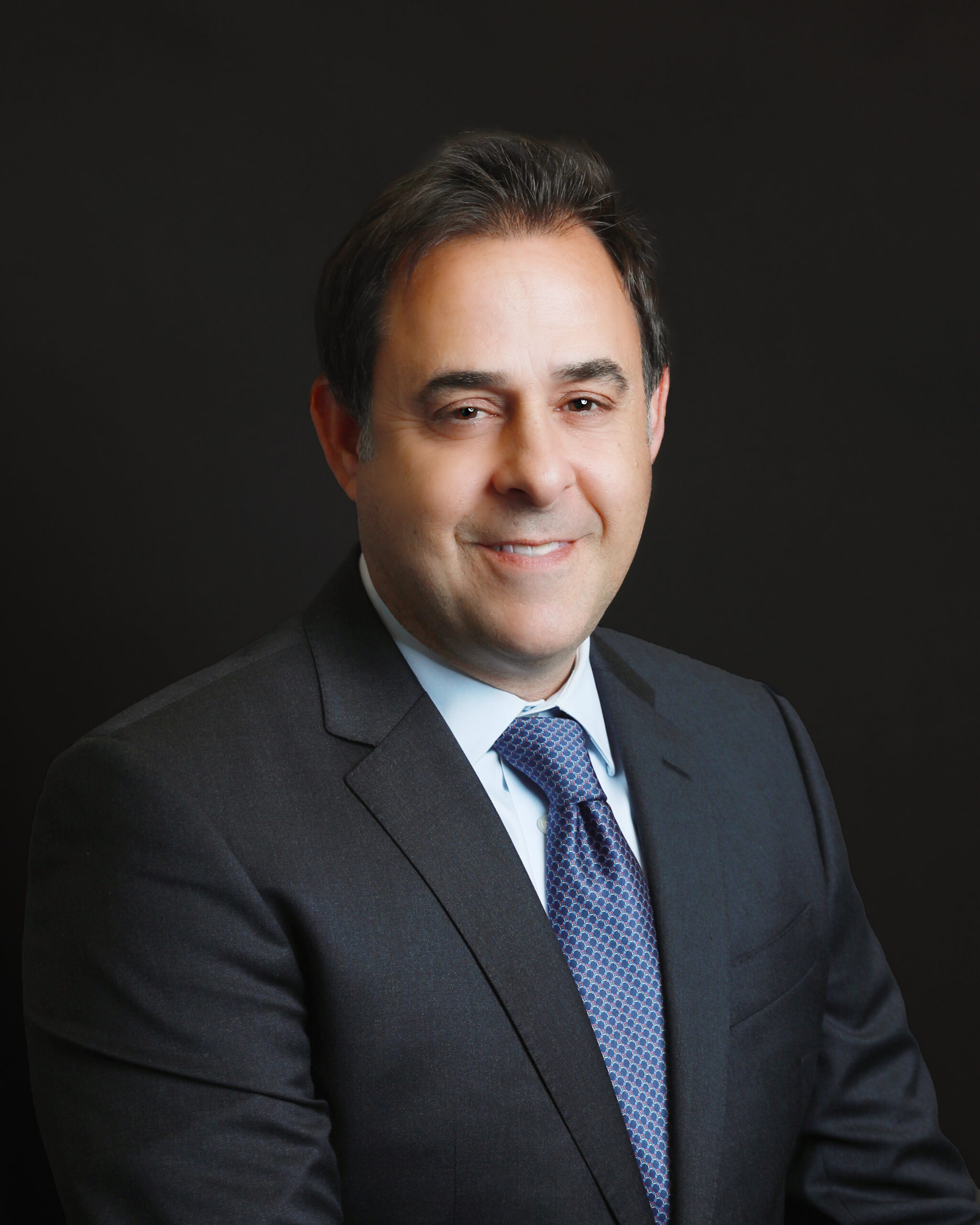
John Akhnoukh, M.D.
Board Certified Anesthesiologist & Interventional Pain Management Physician
Visit Profile

Pain Management
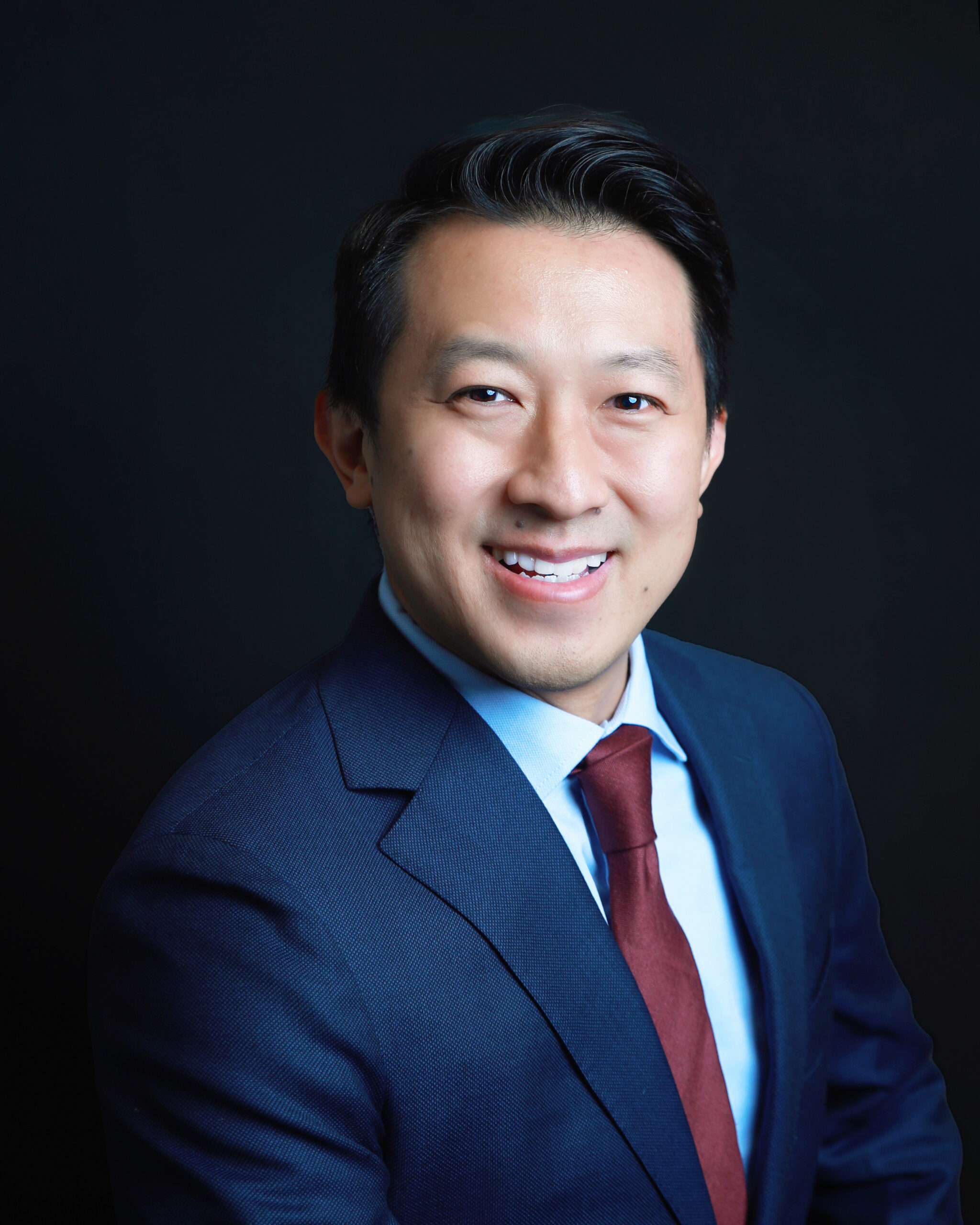
James Yu, D.O.
Board Certified Anesthesiologist & Interventional Pain Management Physician
Visit Profile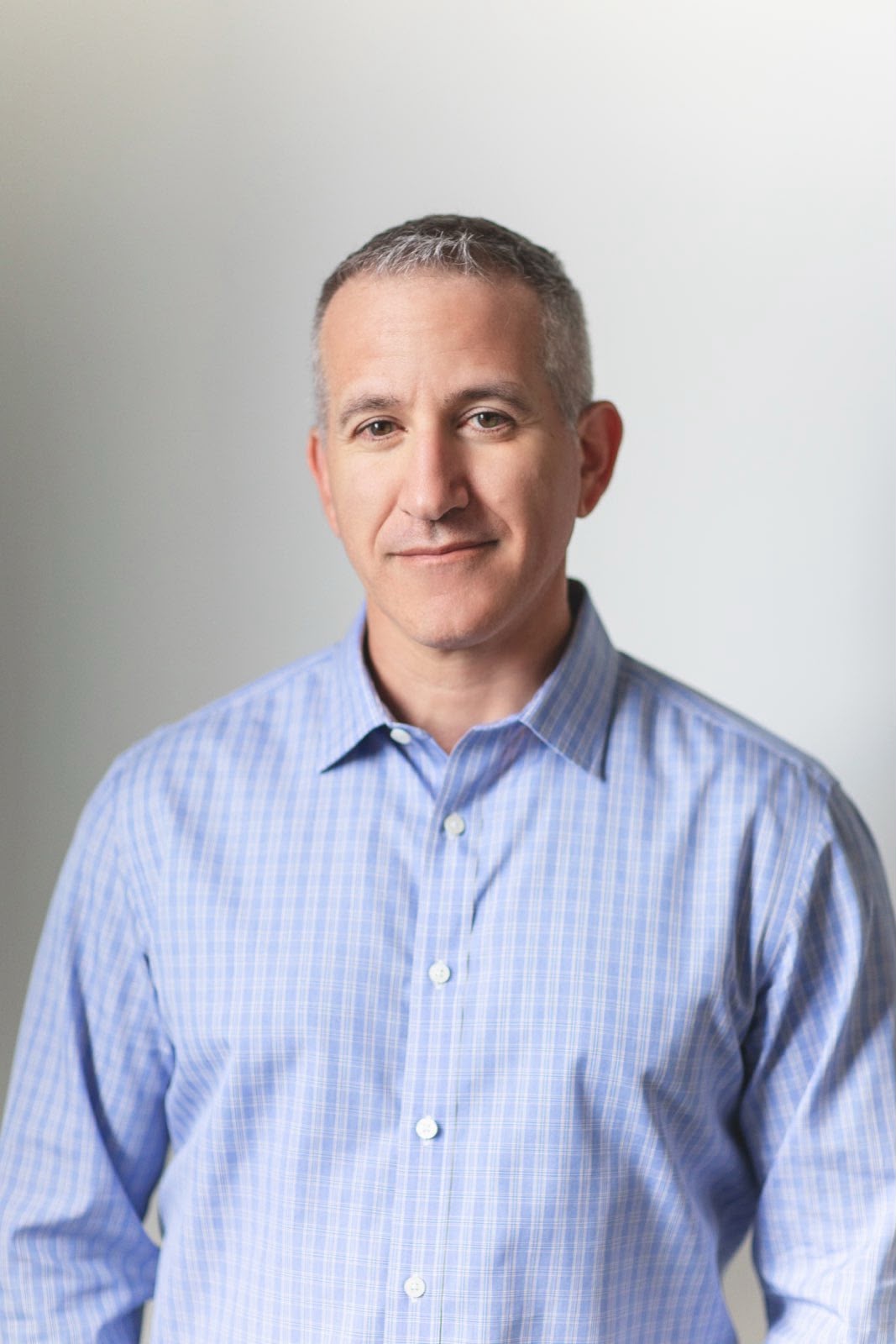

Pain Management
Benjamin Souferi, D.O.
Fellowship-Trained Interventional Pain Medicine Physician (Cleveland Clinic)
Visit ProfilePain Conditions Affecting Daily Life
Improve your quality of life with our comprehensive approach to pain management
We are dedicated to finding individualized treatment options tailored to fit your needs. Our team is dedicated to helping you lead a productive and active life, free from pain and disruption.
Our Locations
Pain management and orthopedic care across New York and New Jersey.