Minimally Invasive Lumbar Decompression Overview:
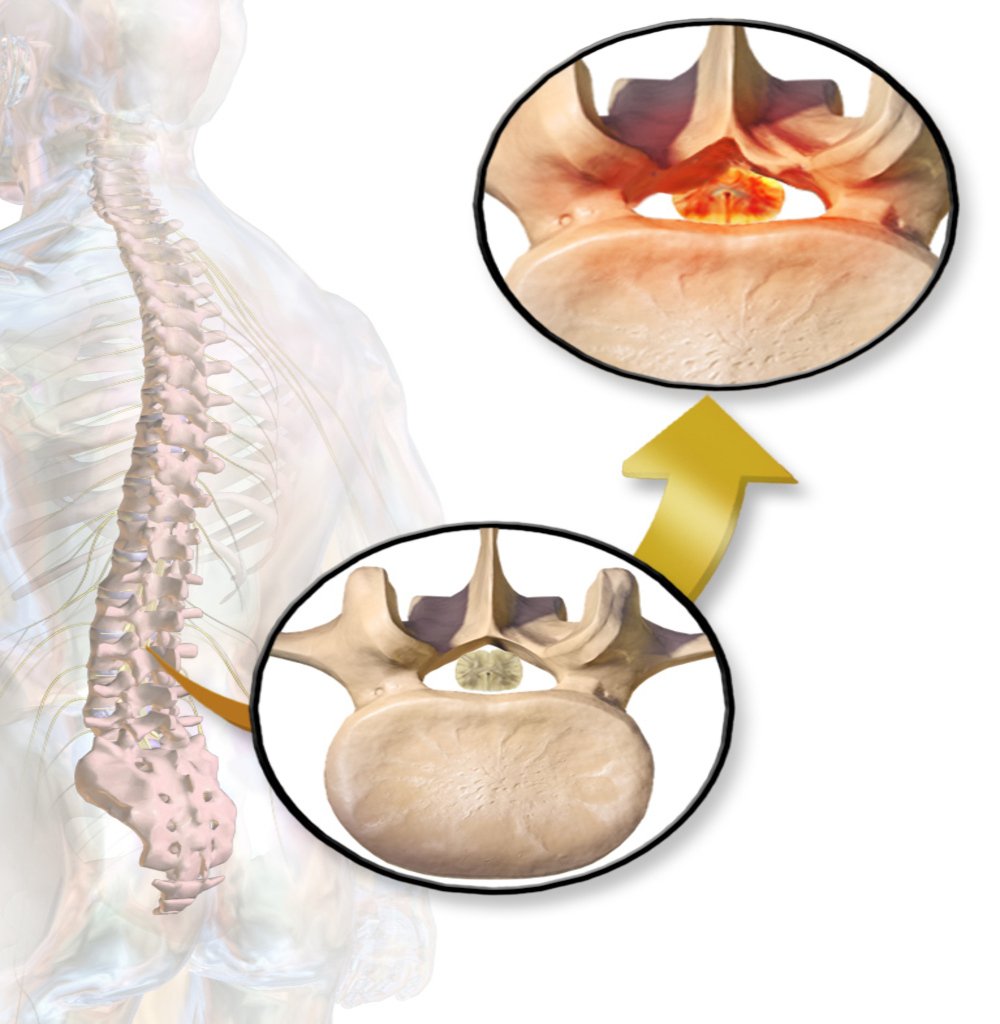
Minimally Invasive Lumbar Decompression (MILD) is a procedure that is used to treat lumbar spinal stenosis, a condition in which the spinal canal becomes narrowed, which can compress the nerves and cause pain. MILD is a minimally invasive surgical procedure designed to create more space within the spinal canal and reduce nerve pressure.
MILD is typically performed using a small incision and specialized instruments, such as a microscope or endoscope, to access the affected spinal area. During the procedure, the surgeon removes tiny amounts of bone or tissue, causing the spinal canal to narrow and creating more space for the nerves to pass through. MILD is typically less invasive and has a shorter recovery time than traditional open surgery.
If spinal stenosis makes it hard to stand or walk very far without your legs aching — and you’d rather not face major back surgery — the MILD procedure (minimally invasive lumbar decompression) may be an option worth exploring. Our pain physicians offer it across Long Island and northern New Jersey, with offices in Plainview, New Hyde Park, and Ronkonkoma, NY, and Clifton, Montville, and Plainfield, NJ.
The short version
- MILD treats lumbar spinal stenosis caused by a thickened ligament pressing on the nerves in your lower back.
- Through a tiny opening, the physician removes small pieces of that thickened tissue to give the nerves more room.
- It’s outpatient, takes about an hour, and leaves no implant or stitches behind.
- It’s far less invasive than open back surgery — and, in published cost analyses, less expensive too.
What the MILD procedure treats
Lumbar spinal stenosis is a narrowing of the space around the nerves in your lower back. A common cause is a ligament in the spine — the ligamentum flavum — becoming thickened and crowding those nerves. That pressure is what produces the classic symptoms: pain, heaviness, or cramping in the legs that gets worse when you stand or walk and eases when you sit or lean forward.
As Johns Hopkins Medicine describes, minimally invasive lumbar decompression uses a small incision and specialized tools to remove some of that thickened ligament, widening the space and relieving pressure on the nerves. It treats this specific cause of stenosis — it isn’t a general fix for every kind of back pain.
Are you a candidate?
MILD may be worth discussing when:
- Imaging confirms lumbar spinal stenosis with a thickened ligamentum flavum
- Your main symptom is leg pain or heaviness when standing or walking, relieved by sitting or bending forward
- Conservative care — physical therapy, medication, and often epidural injections — hasn’t given you enough relief
- You’d like to try a less invasive step before considering open surgery
Not everyone with stenosis is a fit — it depends on what’s causing the narrowing. An evaluation and a look at your imaging is the only way to know.
What to expect
MILD is done in-office on an outpatient basis under light sedation and local anesthesia. Using live X-ray guidance, the physician works through a very small opening — no large incision, no implant, and no stitches. It usually takes about an hour, and you go home the same day with a driver.
Most people begin returning to normal activities over the first month, with much of the initial soreness and swelling settling within the first few weeks, as Johns Hopkins Medicine notes. Your physician will give you specific activity guidance and let you know if physical therapy is recommended.
How it compares to other stenosis options
One reason MILD is attractive is cost and invasiveness compared with the alternatives. A published two-year cost-effectiveness analysis in the NIH library compared these options for lumbar spinal stenosis:
| Approach | Reported 2-year cost | Invasiveness |
|---|---|---|
| MILD procedure | About $5,458 | Minimally invasive, outpatient |
| Epidural steroid injection | About $7,888 | Injection, repeated over time |
| Open surgery | About $13,771 | Traditional back surgery |
If you haven’t yet tried injections, an epidural steroid injection is often part of the conservative path before a decompression is considered. We’ll help you understand where you are in that sequence.
Why patients across Long Island and North Jersey choose Empire
We’re a local pain and orthopedic practice, not a national hospital system — so your evaluation, procedure, and follow-up all happen close to home with the same team.
- New York: Plainview, New Hyde Park, and Ronkonkoma — across Nassau and Suffolk
- New Jersey: Clifton, Montville, and Plainfield — serving Passaic, Morris, and Union County communities
- Interventional pain management and orthopedics under one roof
- Image-guided technique for precise, targeted decompression
Insurance
Coverage varies by plan and by location, and we accept many major insurance plans across our New York and New Jersey offices. The simplest way to know exactly what your plan covers is to call — our team will verify your benefits before your visit, so there are no surprises. Whether you’re on Long Island or in North Jersey, reach out and we’ll walk you through your options.
Frequently asked questions
How long does it take to recover from the MILD procedure?
Most people return to normal activities over the first month, with much of the early soreness and swelling easing within the first few weeks. Your physician will give you specific guidance.
Is the MILD procedure worth it?
For the right patient — stenosis caused by a thickened ligament, with leg symptoms when walking — it can meaningfully improve the ability to stand and walk farther while avoiding bigger surgery. Whether it fits you depends on your imaging and exam.
Who is not a candidate?
People whose stenosis is caused by something other than a thickened ligamentum flavum may not benefit. An evaluation and imaging review is the only way to know for sure.
How much pain is there afterward?
Some soreness and swelling in the first few weeks is normal and usually settles. Let your physician know if pain isn’t improving or seems to be increasing.
Is it surgery?
It’s a minimally invasive procedure done through a tiny opening, without a large incision, implant, or stitches — much less invasive than traditional open back surgery.
How is it different from an epidural steroid injection?
An epidural injection reduces inflammation around the nerves for a period of time. MILD physically removes some of the thickened tissue causing the narrowing. Injections are often tried first in the conservative path.
Hard to stand or walk because of spinal stenosis?
Our pain physicians see patients across Long Island, NY and northern New Jersey. We’ll review your imaging and tell you honestly whether the MILD procedure is a reasonable option for you.
New York: 516-229-1443 | New Jersey: 732-630-7246
JA
Medically reviewed by Dr. John Akhnoukh, M.D. — Board-certified in Anesthesiology & Interventional Pain Management
Last reviewed July 2026 · Empire Minimally Invasive Spine & Pain
What Our Patients Say
Our Plainview office has moved
Find us at our new location:
520 Old Country Rd
Plainview, NY 11803
Same doctors, same phone numbers.
Most Major Plans,
No-Fault & Personal Injury.
We accept most major insurance plans across our New York and New Jersey offices. Select your state to see accepted plans.
Accepted at our New York Locations
Workers' Compensation
No-Fault (NY & NJ)
Lien Cases
Medicare
Empire BCBS
BCBS / Anthem
Cigna
Aetna
Empire NYSHIP
Oxford (PPO)
United Health Care
GHI / Emblem Health
Humana (PPO)
Magnacare (PPO)
Northwell Direct
1199 SEIU
Self Pay
Accepted at our New Jersey Locations
No-Fault (NJ)
Lien Cases
Horizon BCBS
Empire NYSHIP
BCBS / Anthem (PPO)
Cigna
Aetna (PPO)
GHI / Emblem (PPO)
Port Authority UHC
Verizon Plan
Carpenter & Trade Unions
Self Pay
Medicare, Medicaid and Workers' Compensation are not accepted at our New Jersey locations. Not sure about your plan? Call us and we'll verify before your visit.
Not sure about your plan?
Call Us — 516-229-1443
Verify Your Coverage for FREE
Enter your information and our team will confirm your benefits before your visit.
✓ HIPAA Compliant
✓ No Obligation
✓ Same-Day Response
Your information is encrypted and secure. By submitting, you consent to receive communications regarding your appointment. You may opt out at any time.
Meet Our Pain Management & Orthopedic Specialists
Board-certified physicians dedicated to accurate diagnosis and minimally invasive care.

Pain Management
John Akhnoukh, M.D.
Board Certified Anesthesiologist & Interventional Pain Management Physician
Visit Profile



Pain Management
James Yu, D.O.
Board Certified Anesthesiologist & Interventional Pain Management Physician
Visit Profile

Pain Management
Benjamin Souferi, D.O.
Fellowship-Trained Interventional Pain Medicine Physician (Cleveland Clinic)
Visit ProfilePain Conditions Affecting Daily Life
Improve your quality of life with our comprehensive approach to pain management
We are dedicated to finding individualized treatment options tailored to fit your needs. Our team is dedicated to helping you lead a productive and active life, free from pain and disruption.
Our Locations
Pain management and orthopedic care across New York and New Jersey.