Radiofrequency Ablation
Radiofrequency ablation (RFA) is a medical procedure in which radiofrequency energy is used to create heat and destroy or ablate tissue.. Call us today to make an appointment we serve patients across New York and New Jersey, including communities such as Plainview, Ronkonkoma, New Hyde Park, Montville, and Plainfield.
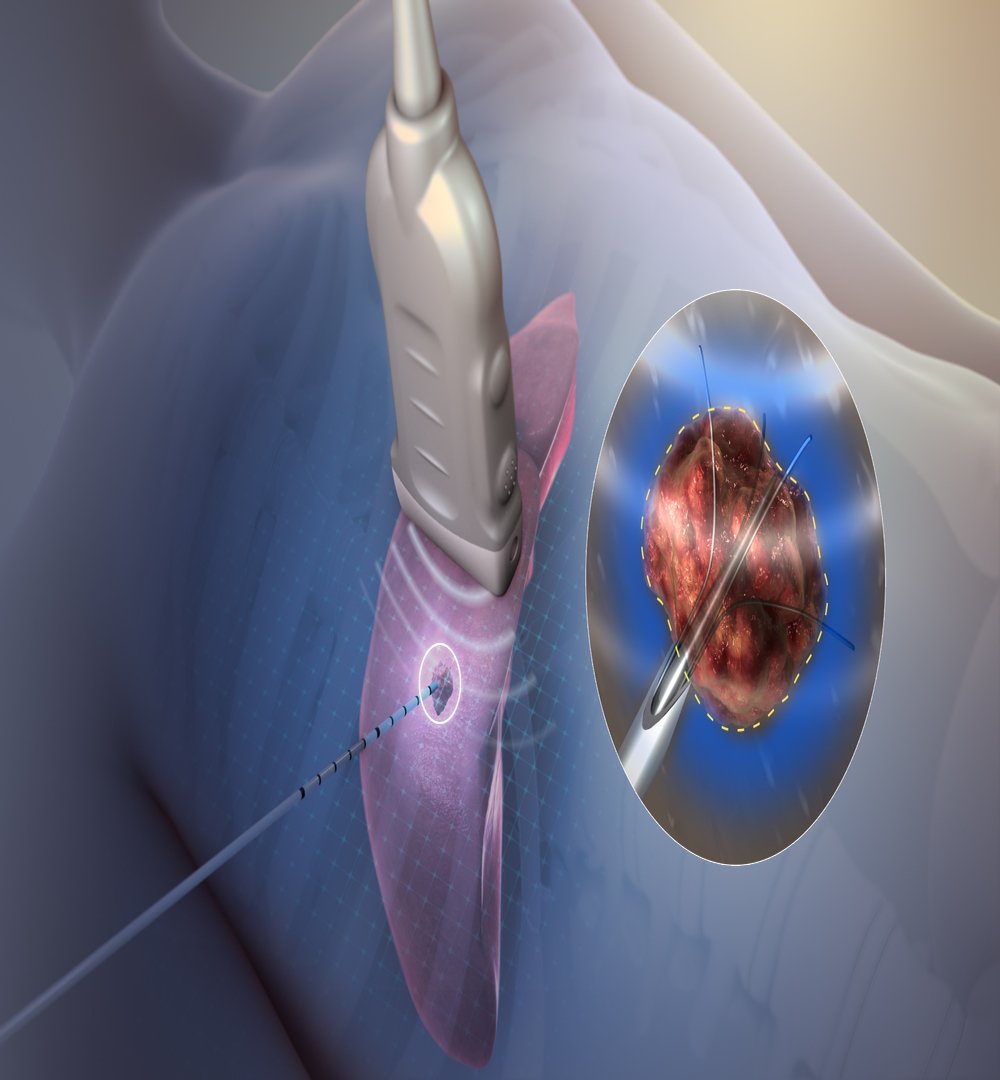
It is often used to treat conditions such as arrhythmias (abnormal heart rhythms), nerve pain, and tumors. During the procedure, a specialized needle or probe is inserted into the body, and radiofrequency energy is transmitted through the probe to the targeted tissue. The heat produced by the radiofrequency energy causes the cells in the targeted tissue to break down and die. RFA is generally a safe and effective procedure with a low risk of complications. However, as with any medical procedure, there are potential risks and side effects, including infection, bleeding, and nerve damage. Your doctor will discuss the potential risks and benefits of RFA with you and help you decide if it is the right treatment option.
If back or neck pain has hung on for months and injections or physical therapy only helped for a while, radiofrequency ablation (RFA) may be the next step. Our pain physicians perform RFA across Long Island and northern New Jersey — with offices in Plainview, New Hyde Park, and Ronkonkoma, NY, and Clifton, Montville, and Plainfield, NJ.
The short version
- RFA uses heat to quiet the small nerves that carry pain from arthritic facet joints in your spine.
- Relief commonly lasts 6–12 months, and for some patients one to two years or longer.
- It’s an outpatient procedure — no incision, no hospital stay, minimal downtime.
- You’ll usually need a diagnostic nerve block first to confirm RFA will work for you.
What radiofrequency ablation actually treats
Most RFA in a pain practice targets facet joint pain — pain from the small paired joints running up the back of your spine. When those joints become arthritic or irritated, tiny nerves called the medial branch nerves carry the pain signal to your brain. RFA uses radiofrequency energy to heat and interrupt those specific nerves, so the signal no longer gets through.
It’s commonly used for chronic pain in the lower back and neck that hasn’t responded to at least a few months of conservative care — medication, physical therapy, and injections. It is not a first step, and it isn’t for every kind of back pain. Pain that radiates down the leg from a herniated disc, for example, is usually a different problem with a different fix.
Are you a candidate?
The honest answer depends on a test. Before recommending RFA, your physician will usually perform a diagnostic medial branch block — a numbing injection at the same nerves RFA would target. If that block gives you strong, if temporary, relief, it’s good evidence the facet joints are the source of your pain and that RFA is likely to help. If it doesn’t, RFA probably isn’t your answer, and we’ll say so rather than proceed.
RFA tends to fit when:
- Your pain is mainly in the back or neck itself, not shooting down a limb
- It’s lasted several months despite conservative treatment
- A diagnostic block gave you meaningful, temporary relief
- You’d rather avoid long-term pain medication or surgery
What to expect during and after
RFA is done in-office, on an outpatient basis, using live X-ray guidance to place the needle precisely. Most procedures take roughly 20 to 45 minutes depending on how many nerves are treated. You’re awake but comfortable, and you go home the same day — you’ll just need someone to drive you.
Afterward, it’s normal for the area to feel sore for a week or so as the treated nerves settle. Pain relief isn’t always immediate; many people notice it build over the following two to six weeks.
Worth knowing: RFA doesn’t cure the underlying arthritis, and the treated nerves can slowly regrow over time. When they do, the procedure can be repeated — usually after six to twelve months. That’s expected, not a failure.
How long does the relief last?
For most people, six months to a year. Some get considerably longer — one to two years or more — while others get less. The variation is real, and no honest practice can promise you a specific number. What we can tell you is that RFA generally provides longer relief than a steroid injection, which is a large part of why it’s worth considering when injections keep wearing off.
| Radiofrequency ablation | Steroid injection | |
|---|---|---|
| Typical relief | 6–12 months, sometimes longer | Weeks to a few months |
| How it works | Interrupts the pain nerves | Reduces inflammation |
| Repeatable? | Yes, once nerves regrow | Yes, but limited per year |
| Best after | A positive diagnostic block | Earlier in treatment |
Why patients across Long Island and North Jersey choose Empire
We’re a local pain and orthopedic practice, not a national hospital system — and that’s the point. You see the same physicians, close to home, with imaging and follow-up handled in one place.
- New York: Plainview, New Hyde Park, and Ronkonkoma — convenient across Nassau and Suffolk
- New Jersey: Clifton, Montville, and Plainfield — serving Passaic, Morris, and Union County communities
- Interventional pain management and orthopedics under one roof
- Image-guided technique, including advanced ultrasound guidance for appropriate cases
Insurance
Coverage varies by plan and by location, and we accept many major insurance plans across our New York and New Jersey offices. The simplest way to know exactly what your plan covers is to call — our team will verify your benefits before your visit, so there are no surprises. Whether you’re on Long Island or in North Jersey, reach out and we’ll walk you through your options.
Frequently asked questions
How long does it take to recover from radiofrequency ablation?
Most people return to normal activity within a day or two, avoiding strenuous activity for the first 24–48 hours. The treated area can stay sore for about a week while the nerves settle.
Is radiofrequency ablation painful?
During the procedure you’re numbed and kept comfortable, and it’s usually well tolerated. Afterward, expect temporary soreness at the site for several days — an ice pack helps.
Are you awake during the procedure?
Usually yes. RFA is typically done with local anesthetic while you’re awake but relaxed, which lets your physician confirm the correct nerves are being treated. You’ll still need a ride home.
Is radiofrequency ablation considered surgery?
No. It’s a minimally invasive, nonsurgical procedure done through a needle under X-ray guidance — no incision and no stitches.
What’s the downside of radiofrequency ablation?
The relief is temporary because nerves regrow, so the procedure may need repeating. There’s also short-term soreness, and a small risk of the usual needle-procedure complications, which your physician will review with you.
What if radiofrequency ablation doesn’t work for me?
It doesn’t work for everyone, which is exactly why the diagnostic block comes first — to improve the odds before you commit. If RFA isn’t the answer, we’ll walk you through other options rather than repeat something that didn’t help.
Ready to find out if RFA is right for you?
Our pain physicians see patients across Long Island, NY and northern New Jersey. We’ll review your history, confirm the source of your pain, and give you a straight answer.
New York: 516-229-1443 | New Jersey: 732-630-7246
Our Back Pain Treatment Options May Include:
Epidural Steroid Injections
Radiofrequency Ablation (RFA)
Spinal Cord Stimulator Implant
Kyphoplasty / Vertebroplasty
Basivertebral Nerve Ablation
PRP Therapy
Regenerative Disc Injections
Related reading: RFA Recovery, Aftercare and How Long Relief Lasts
JA
Medically reviewed by Dr. John Akhnoukh, M.D. — Board-certified in Anesthesiology & Interventional Pain Management
Last reviewed July 2026 · Empire Minimally Invasive Spine & Pain
Radiofrequency ablation across northern New Jersey
Our Clifton, NJ office in Passaic County makes long-lasting, image-guided radiofrequency ablation convenient for patients across northern New Jersey — without a long drive or a hospital stay. We regularly care for RFA patients from:
- Clifton & Passaic
- Montclair & Nutley
- Montville, Boonton & Towaco
- Parsippany & Lincoln Park
- Pine Brook & Fairfield
- Plainfield & North Plainfield
- Scotch Plains & Fanwood
- Dunellen & Middlesex
Radiofrequency ablation is often the next step when facet-joint or sacroiliac-joint pain has been confirmed with a diagnostic medial branch block but the relief didn’t last. Using heat delivered through a thin needle under X-ray guidance, RFA quiets the small nerves carrying the pain signal — and for the right candidate, relief can last many months before the nerve regenerates and the procedure can be repeated. It’s a minimally invasive, in-office option that doesn’t involve surgery.
We also treat New Jersey patients whose back or neck pain follows a car accident (No-Fault / PIP) or a work injury (Workers’ Compensation), and can coordinate the documentation those claims require. Bring your claim details to your first visit and our team will verify coverage before scheduling.
Radiofrequency ablation FAQs — New Jersey
Where can I get radiofrequency ablation in New Jersey?
At our Clifton, NJ office, which serves Passaic County and the surrounding northern New Jersey communities including Montville, Parsippany, Boonton, and the Plainfield area. Call our New Jersey team at 732-630-7246 to schedule an evaluation.
Does RFA in New Jersey work for both back and neck pain?
Yes. Radiofrequency ablation can treat facet-joint pain in the lower back (lumbar) and the neck (cervical), as well as sacroiliac-joint pain, once a diagnostic block has confirmed the joint is the pain source. Your physician will determine whether your pain pattern is a good fit.
Is radiofrequency ablation covered by insurance in NJ?
RFA is commonly covered when it’s medically appropriate and preceded by a successful diagnostic block. We accept most major plans and verify your specific coverage — including No-Fault and Workers’ Compensation cases — before your procedure.
How soon can I be seen in New Jersey?
Same-week evaluations are usually available at our Clifton office. Call 732-630-7246 to schedule with our interventional pain team.
What Our Patients Say
Our Plainview office has moved
Find us at our new location:
520 Old Country Rd
Plainview, NY 11803
Same doctors, same phone numbers.
Most Major Plans,
No-Fault & Personal Injury.
We accept most major insurance plans across our New York and New Jersey offices. Select your state to see accepted plans.
Accepted at our New York Locations
Workers' Compensation
No-Fault (NY & NJ)
Lien Cases
Medicare
Empire BCBS
BCBS / Anthem
Cigna
Aetna
Empire NYSHIP
Oxford (PPO)
United Health Care
GHI / Emblem Health
Humana (PPO)
Magnacare (PPO)
Northwell Direct
1199 SEIU
Self Pay
Accepted at our New Jersey Locations
No-Fault (NJ)
Lien Cases
Horizon BCBS
Empire NYSHIP
BCBS / Anthem (PPO)
Cigna
Aetna (PPO)
GHI / Emblem (PPO)
Port Authority UHC
Verizon Plan
Carpenter & Trade Unions
Self Pay
Medicare, Medicaid and Workers' Compensation are not accepted at our New Jersey locations. Not sure about your plan? Call us and we'll verify before your visit.
Not sure about your plan?
Call Us — 516-229-1443
Verify Your Coverage for FREE
Enter your information and our team will confirm your benefits before your visit.
✓ HIPAA Compliant
✓ No Obligation
✓ Same-Day Response
Your information is encrypted and secure. By submitting, you consent to receive communications regarding your appointment. You may opt out at any time.
Meet Our Pain Management & Orthopedic Specialists
Board-certified physicians dedicated to accurate diagnosis and minimally invasive care.

Pain Management
John Akhnoukh, M.D.
Board Certified Anesthesiologist & Interventional Pain Management Physician
Visit Profile



Pain Management
James Yu, D.O.
Board Certified Anesthesiologist & Interventional Pain Management Physician
Visit Profile

Pain Management
Benjamin Souferi, D.O.
Fellowship-Trained Interventional Pain Medicine Physician (Cleveland Clinic)
Visit ProfilePain Conditions Affecting Daily Life
Improve your quality of life with our comprehensive approach to pain management
We are dedicated to finding individualized treatment options tailored to fit your needs. Our team is dedicated to helping you lead a productive and active life, free from pain and disruption.
Our Locations
Pain management and orthopedic care across New York and New Jersey.