Medial branch blocks & facet joint injections Overview:
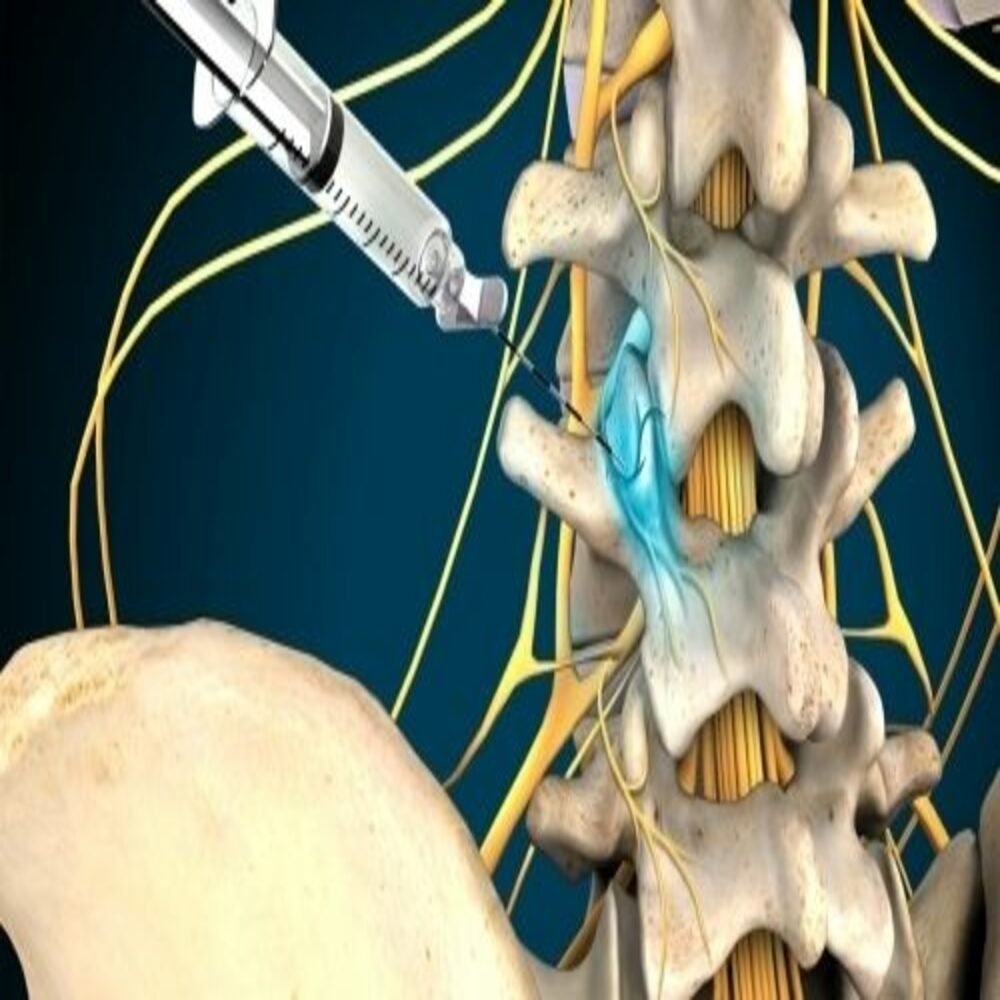
Medial branch blocks (MBBs) and facet joint injections are medical treatments that involve injecting a local anesthetic and/or corticosteroid medication into the medial branches or facet joints of the spine. The medial branches are small nerves that supply sensation to the facet joints, which are the small joints in the spine that allow for movement. MBBs and facet joint injections are typically used to treat pain in the neck, upper back, and lower back caused by inflammation of the facet joints.
MBBs and facet joint injections are typically administered in a hospital or outpatient clinic setting and do not require a hospital stay. The procedure takes about 15-30 minutes to complete and is usually done under local anesthesia. During the procedure, the patient lies on their stomach or side, and the skin over the injection site is numbed with a local anesthetic. A needle is inserted into the facet joint or medial branch, and the anesthetic and/or corticosteroid medication is injected.
MBBs and facet joint injections are generally considered safe, but as with any medical treatment, there are potential risks and complications, such as infection and bleeding. Most patients experience relief from pain within a few days to a few weeks after the injection, but the effects of the injection may only last for a few weeks to a few months. MBBs and facet joint injections may be repeated if necessary. It is crucial for patients to discuss the potential benefits and risks of these treatments with their healthcare provider before starting treatment.
If your lower back or neck aches when you stand, twist, or lean back — and it stays put rather than shooting down a limb — the small facet joints in your spine may be the source. Facet joint injections and medial branch blocks both diagnose and relieve that pain. Our pain physicians perform them across Long Island and northern New Jersey, with offices in Plainview, New Hyde Park, and Ronkonkoma, NY, and Clifton, Montville, and Plainfield, NJ.
The short version
- Facet joints are small joints along the back of your spine that can become arthritic and painful.
- These injections do two jobs: confirm the facet joints are the source, and relieve the pain.
- A good response often points toward longer-lasting relief with radiofrequency ablation.
- Quick, image-guided, outpatient — you’re in and out the same day.
What facet joint pain feels like
Facet joints are the small paired joints running up the back of your spine, from your neck to your lower back. They let you bend and twist — and like any joint, they can wear down with age and arthritis. When they do, the pain is usually felt in the back or neck itself and tends to get worse when you extend or rotate your spine. Unlike sciatica, it typically doesn’t radiate far down the leg or arm.
Two procedures, one goal
People often hear “facet joint injection” and “medial branch block” and assume they’re different treatments. They’re closely related, and which one your physician chooses depends on the goal.
| Facet joint injection | Medial branch block | |
|---|---|---|
| Where it goes | Into the facet joint itself | At the medial branch nerve near the joint |
| Main purpose | Relieve inflammation in the joint | Confirm the joint is the pain source |
| Often used to | Ease pain and aid therapy | Decide if you’re a candidate for ablation |
A medial branch block is frequently the diagnostic step: if numbing that specific nerve clearly relieves your pain, it strongly suggests the facet joint is the culprit — and that a longer-lasting radiofrequency ablation would likely help.
Why this matters: these injections are how we make sure the next step actually fits your pain, instead of guessing. If the block doesn’t help, that’s useful information too — it tells us to look elsewhere before recommending anything more involved.
Are you a candidate?
- Your pain sits mainly in the back or neck and worsens with bending or twisting
- It hasn’t radiated far down a leg or arm (that pattern points more toward an epidural steroid injection)
- Conservative care — rest, medication, physical therapy — hasn’t resolved it
- You want to confirm the pain source before considering longer-term treatment
What to expect
The injection is a quick, in-office outpatient procedure done under live X-ray guidance for precise placement. The skin is numbed first, you’re awake, and it takes only a few minutes. You go home the same day. If the injection is diagnostic, your physician may ask you to keep track of how much relief you feel and for how long — that record guides what comes next.
Why patients across Long Island and North Jersey choose Empire
Because diagnosis, injection, and follow-up all happen in one local practice with the same team, we can move smoothly from confirming your pain source to treating it — without sending you across a hospital system.
- New York: Plainview, New Hyde Park, and Ronkonkoma — across Nassau and Suffolk
- New Jersey: Clifton, Montville, and Plainfield — serving Passaic, Morris, and Union County
- Interventional pain management and orthopedics under one roof
- Image-guided precision, with a clear path from diagnosis to lasting relief
Insurance
Coverage varies by plan and by location, and we accept many major insurance plans across our New York and New Jersey offices. The simplest way to know exactly what your plan covers is to call — our team will verify your benefits before your visit, so there are no surprises. Whether you’re on Long Island or in North Jersey, reach out and we’ll walk you through your options.
Frequently asked questions
What’s the difference between a facet joint injection and a medial branch block?
A facet joint injection places medication into the joint to reduce inflammation. A medial branch block numbs the nerve that carries the joint’s pain signal, mainly to confirm the joint is the source. They’re closely related and your physician picks based on the goal.
Does it hurt?
The skin is numbed first and most people tolerate it well — more pressure than sharp pain. Mild soreness at the site for a day or two afterward is normal.
How long does the relief last?
It varies. A diagnostic block may give only short relief but valuable information; a therapeutic injection can help longer. If relief is good but temporary, that’s often the signal that radiofrequency ablation could give you a longer stretch.
Am I awake for it?
Yes. It’s a brief injection with local numbing, done while you’re awake, and you go home the same day.
What happens after a positive result?
If numbing the nerve clearly relieved your pain, you’re likely a good candidate for radiofrequency ablation, which targets the same nerve for much longer-lasting relief.
Back or neck pain that won’t quit?
Our pain physicians see patients across Long Island, NY and northern New Jersey. We’ll find out whether your facet joints are the source — and map the fastest path to relief.
New York: 516-229-1443 | New Jersey: 732-630-7246
Related reading: Medial Branch Blocks vs. Facet Joint Injections: What’s the Difference?
JA
Medically reviewed by Dr. John Akhnoukh, M.D. — Board-certified in Anesthesiology & Interventional Pain Management
Last reviewed July 2026 · Empire Minimally Invasive Spine & Pain
What Our Patients Say
Medicare, Workers Comp,
No Fault & Others.
We accept most major insurance plans across our New York and New Jersey offices. Select your state to see accepted plans.
Accepted at our New York Locations
Workers' Compensation
No-Fault (NY & NJ)
Lien Cases
Medicare
Empire BCBS
BCBS / Anthem
Cigna
Aetna
Empire NYSHIP
Oxford (PPO)
United Health Care
GHI / Emblem Health
Humana (PPO)
Magnacare (PPO)
Northwell Direct
1199 SEIU
Self Pay
Accepted at our New Jersey Locations
Workers' Compensation
No-Fault (NJ)
Lien Cases
Horizon BCBS
Empire NYSHIP
BCBS / Anthem (PPO)
Cigna
Aetna (PPO)
GHI / Emblem (PPO)
Port Authority UHC
Verizon Plan
Carpenter & Trade Unions
Self Pay
Medicare and Medicaid are not accepted at our New Jersey locations. Not sure about your plan? Call us and we'll verify before your visit.
Not sure about your plan?
Call Us — 516-229-1443
Verify Your Coverage for FREE
Enter your information and our team will confirm your benefits before your visit.
✓ HIPAA Compliant
✓ No Obligation
✓ Same-Day Response
Your information is encrypted and secure. By submitting, you consent to receive communications regarding your appointment. You may opt out at any time.
Meet Our Pain Management & Orthopedic Specialists
Board-certified physicians dedicated to accurate diagnosis and minimally invasive care.

Pain Management
John Akhnoukh, M.D.
Board Certified Anesthesiologist & Interventional Pain Management Physician
Visit Profile



Pain Management
James Yu, D.O.
Board Certified Anesthesiologist & Interventional Pain Management Physician
Visit Profile

Pain Management
Benjamin Souferi, D.O.
Fellowship-Trained Interventional Pain Medicine Physician (Cleveland Clinic)
Visit ProfilePain Conditions Affecting Daily Life
Improve your quality of life with our comprehensive approach to pain management
We are dedicated to finding individualized treatment options tailored to fit your needs. Our team is dedicated to helping you lead a productive and active life, free from pain and disruption.
Our Locations
Pain management and orthopedic care across New York and New Jersey.