
Why Your Shoulder Hurts More at Night — and What Helps
Medically reviewed by Jeffrey Guttman, MD — Orthopedic Surgeon, Sports Medicine
All day, the shoulder is annoying. At 2 a.m., it’s the only thing in the world.
This is the most common story in shoulder clinic, and it’s usually the reason someone finally books the appointment. Not the pain itself — people tolerate pain for months. The sleep. You can push through an aching shoulder at work. You can’t push through the fourth night in a row of waking up every time you roll over.
Here’s what’s actually happening, what helps, and what the honest limits of the answer are.
Key Takeaways
- Night pain affects 91–93% of people with rotator cuff injuries — it’s the rule, not a red flag on its own.
- Nobody has fully settled why. Pressure inside the shoulder, inflammation, blood flow, and hormone cycles are all implicated.
- Sleeping on the bad side compresses the exact space that’s already irritated. Position changes are the cheapest thing to try tonight.
- Night pain that survives a few weeks of self-care is worth an evaluation — especially if the arm is weak, not just sore.
What this article covers
- Why does shoulder pain get worse at night?
- Does night pain mean I have a rotator cuff tear?
- What actually helps you sleep tonight?
- What doesn’t help
- When should you stop managing it yourself?
- Does treatment actually fix night pain?
- Frequently asked questions
Why does shoulder pain get worse at night?
Several things stack up at once, and the honest answer is that researchers haven’t agreed on which one matters most. Lying down changes the pressure inside the shoulder. Inflammation runs on a daily cycle that doesn’t favor you at night. Blood flow to the area shifts. And the distractions that kept the pain in the background all day — work, conversation, movement — are gone.
That last one isn’t a throwaway. Pain needs your attention to be loud, and at 2 a.m. it has all of it.
The mechanical part is the most actionable. When you lie on the affected shoulder, your upper body weight compresses the space where the rotator cuff tendons pass under the bone — the exact spot that’s already irritated. Sleeping on the other side isn’t automatically safe either: if the sore arm drapes across your body, it pulls on the same tendons from a different angle.
Worth knowing: you’ll find confident explanations of night pain all over the internet. The research is more humble than that. A review of the mechanisms found no consensus on the cause — several plausible ones, none proven dominant (Sleep disturbances in rotator cuff pathology, 2024). Anyone telling you exactly why your shoulder hurts at night is telling you more than the evidence knows.
Does night pain mean I have a rotator cuff tear?
It’s a strong hint, but it doesn’t confirm anything by itself. Night pain is close to universal in rotator cuff problems: a review of ten studies covering 1,516 patients found nighttime pain in 91–93% of people with rotator cuff injuries, averaging 5.5 out of 10 in intensity, with every single study reporting disrupted sleep (systematic review, PubMed, 2022).
What that means practically: if you have a cuff problem, you’ll almost certainly have night pain. It doesn’t run the other way. Frozen shoulder, arthritis, and impingement all wake people up too. The symptom points at the shoulder; it doesn’t name the diagnosis.
Age shifts the odds. Rotator cuff disease shows up in under 10% of people aged 20 and younger, and in roughly 62% of people 80 and older. It’s one of those conditions that becomes ordinary as we age — which is also why a tear on an MRI isn’t automatically the thing causing your pain.
What actually helps you sleep tonight?
Start with position, because it’s free and it targets the mechanical part of the problem. Sleep on your back, or on the good side with a pillow supporting the sore arm so it isn’t dragged across your chest. A lot of people do better propped up — a recliner, or pillows building an incline — because it takes load off the joint.
Beyond position, the reasonable things to try are the boring ones: a pillow tucked under the affected arm to keep it from falling backward, heat before bed to loosen things up, and anti-inflammatory medication if your doctor has said it’s appropriate for you.
| Worth trying | Why it makes sense |
|---|---|
| Sleep on your back, or the unaffected side | Keeps body weight off the irritated space |
| Pillow supporting the sore arm | Stops the arm dragging across the body and pulling on tendons |
| Sleeping propped up or in a recliner | Reduces load on the joint |
| Heat before bed | Loosens the surrounding muscle before you lie down |
Set expectations honestly: these manage the symptom. They don’t treat the tendon. If the shoulder is genuinely injured, better sleep positioning buys you comfort while you sort out the actual problem — it isn’t the plan.
What doesn’t help
Waiting it out, mostly. The pattern we see over and over is someone who’s been sleeping badly for eight months, adjusting their whole life around a shoulder, arriving at an appointment that could have happened in month two.
Also unhelpful: pushing through workouts that hurt, on the theory that you’ll strengthen your way past it. Loading an irritated cuff harder is how a manageable problem becomes a bigger one. And repeatedly stretching a shoulder that’s already inflamed tends to make the night worse, not better.
When should you stop managing it yourself?
Book an appointment if night pain has lasted more than a few weeks despite changing how you sleep, if you’ve lost strength rather than just gained pain, if the shoulder went bad after a fall or a specific injury, or if you can’t lift your arm overhead at all.
The weakness distinction matters more than most people realize. Pain is uncomfortable and often improves with time and therapy. Weakness suggests the tendon isn’t doing its job, and that’s a different conversation — one worth having sooner. If you’re weighing what comes next, we walk through the surgery-or-not decision in Can You Heal a Torn Rotator Cuff Without Surgery?
Does treatment actually fix night pain?
Often, yes — and the sleep improvement is frequently what patients notice first. In the same systematic review, pain scores after rotator cuff repair dropped below 2 out of 10, and sleep quality improved alongside them.
That doesn’t mean surgery is the answer to night pain. Most rotator cuff problems don’t need repair, and physical therapy resolves the symptoms for a large share of people. But it does mean night pain is a treatable problem rather than something you’re stuck with. Sometimes an ultrasound-guided shoulder injection quiets things down enough to sleep and do the therapy that actually rebuilds function — the injection isn’t the fix, it’s what makes the fix possible.
Frequently asked questions
Why does my shoulder only hurt at night?
Because during the day you’re moving, distracted, and holding the arm in positions that don’t compress the joint. At night, the mechanics change and the distractions disappear. A shoulder that feels fine at your desk can be genuinely injured.
Should I sleep in a sling?
Only if your surgeon told you to, which is normal after a repair. Sling-sleeping without a reason tends to stiffen the shoulder, and stiffness is its own problem.
Can a new mattress or pillow fix rotator cuff night pain?
It can make you more comfortable, and support matters. It won’t repair a tendon. Treat bedding as symptom management, not treatment — and be skeptical of anything marketed as a cure for shoulder pain.
How long should I put up with it before calling?
A few weeks of honest self-care is a fair trial. Beyond that, you’re not gathering information anymore, you’re just losing sleep. If there’s weakness or the pain started with an injury, don’t wait the few weeks.
Losing sleep over your shoulder?
Our orthopedic team evaluates shoulder pain across Long Island and northern New Jersey — and starts with the least invasive option that can actually solve it. Read more about rotator cuff repair or shoulder pain.
Schedule a consultation → | New York: 516-229-1443 | New Jersey: 732-630-7246
About the author. Jeffrey Guttman, MD is a board-certified orthopedic surgeon with a Certificate of Added Qualification in Sports Medicine and more than 20 years in practice. He completed his orthopedic residency at St. Luke’s-Roosevelt Hospital, a Columbia University hospital, where he served as Chief Resident, followed by a sports medicine fellowship in Philadelphia. He holds privileges at Northwell Health–Plainview, Mercy Hospital, and Hudson Regional Hospital.
What Our Patients Say

Dr. Jeffrey Guttman
Articles: 15
Our Plainview office has moved
Find us at our new location:
520 Old Country Rd
Plainview, NY 11803
Same doctors, same phone numbers.
Most Major Plans,
No-Fault & Personal Injury.
We accept most major insurance plans across our New York and New Jersey offices. Select your state to see accepted plans.
Accepted at our New York Locations
Workers' Compensation
No-Fault (NY & NJ)
Lien Cases
Medicare
Empire BCBS
BCBS / Anthem
Cigna
Aetna
Empire NYSHIP
Oxford (PPO)
United Health Care
GHI / Emblem Health
Humana (PPO)
Magnacare (PPO)
Northwell Direct
1199 SEIU
Self Pay
Accepted at our New Jersey Locations
No-Fault (NJ)
Lien Cases
Horizon BCBS
Empire NYSHIP
BCBS / Anthem (PPO)
Cigna
Aetna (PPO)
GHI / Emblem (PPO)
Port Authority UHC
Verizon Plan
Carpenter & Trade Unions
Self Pay
Medicare, Medicaid and Workers' Compensation are not accepted at our New Jersey locations. Not sure about your plan? Call us and we'll verify before your visit.
Not sure about your plan?
Call Us — 516-229-1443
Verify Your Coverage for FREE
Enter your information and our team will confirm your benefits before your visit.
✓ HIPAA Compliant
✓ No Obligation
✓ Same-Day Response
Your information is encrypted and secure. By submitting, you consent to receive communications regarding your appointment. You may opt out at any time.
Meet Our Pain Management & Orthopedic Specialists
Board-certified physicians dedicated to accurate diagnosis and minimally invasive care.

Pain Management
John Akhnoukh, M.D.
Board Certified Anesthesiologist & Interventional Pain Management Physician
Visit Profile


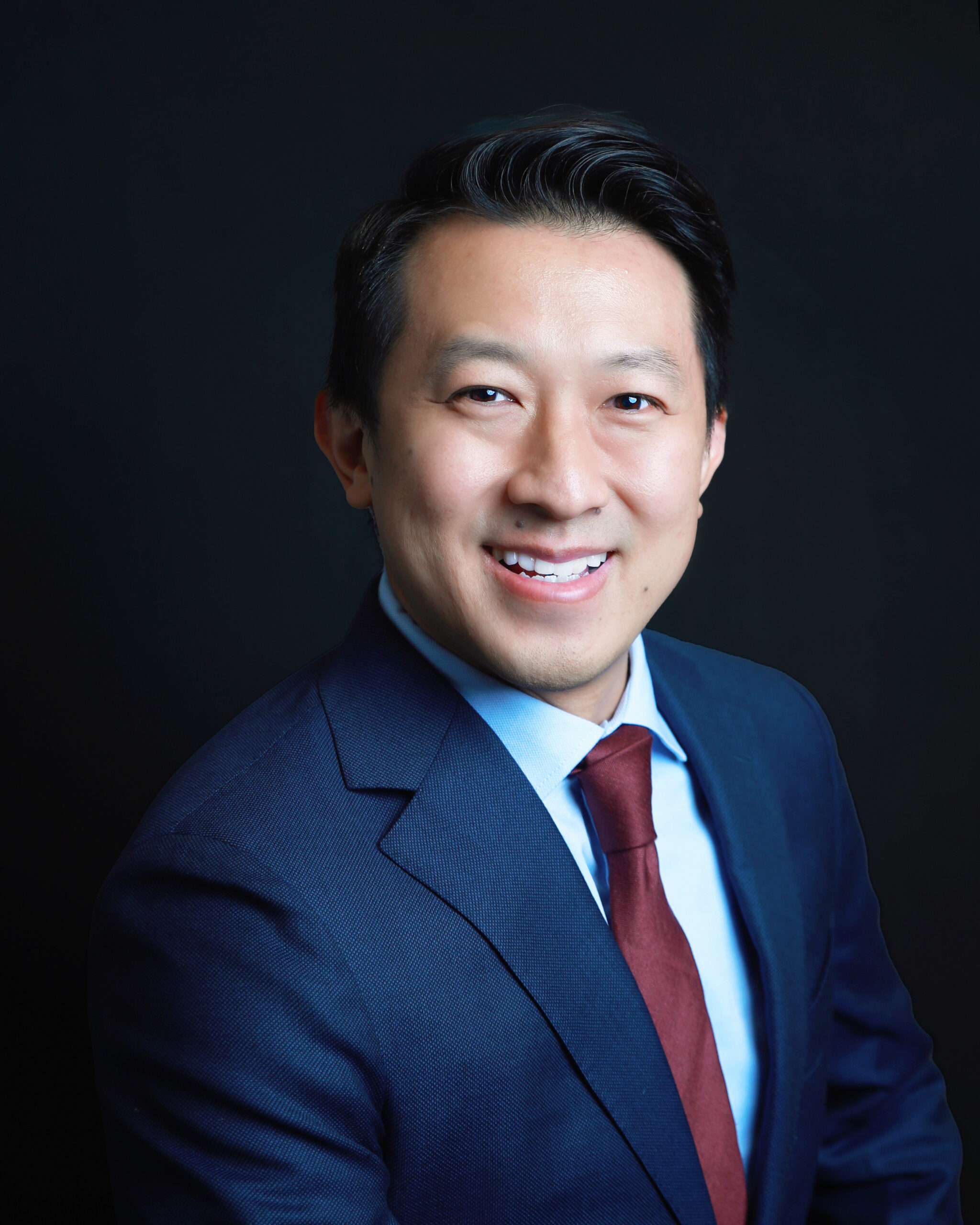
Pain Management
James Yu, D.O.
Board Certified Anesthesiologist & Interventional Pain Management Physician
Visit Profile

Pain Management
Benjamin Souferi, D.O.
Fellowship-Trained Interventional Pain Medicine Physician (Cleveland Clinic)
Visit ProfilePain Conditions Affecting Daily Life
Improve your quality of life with our comprehensive approach to pain management
We are dedicated to finding individualized treatment options tailored to fit your needs. Our team is dedicated to helping you lead a productive and active life, free from pain and disruption.
Our Locations
Pain management and orthopedic care across New York and New Jersey.