Foot Arch Pain: Causes, Relief, and When to See a Doctor
Pain in the arch of your foot can turn every step into a decision. The good news: most arch pain comes from a small number of common, treatable causes, and the large majority of people get better without surgery. This guide explains what’s most likely behind your arch pain, how to tell the causes apart, what actually helps, and the signs that mean it’s time to see a specialist.
Key takeaways
- The two most common causes are plantar fasciitis (heel-to-arch pain, worst with your first steps) and posterior tibial tendon dysfunction (pain along the inner arch).
- Pain that’s worst with your first morning steps and eases after a few minutes points strongly to plantar fasciitis.
- More than 90% of people with plantar fasciitis improve within about 10 months of simple treatment.
- Sudden, severe pain, an inability to bear weight, numbness, or signs of infection are reasons to be seen promptly.
Arch pain that won’t ease up? Talk to a New York or New Jersey specialist.
Empire Minimally Invasive Spine and Pain treats foot and arch pain across New York and New Jersey, starting with the least invasive options that resolve the problem. Same-week appointments are often available.
☎ New York: 516-229-1443 | ☎ New Jersey: 732-630-7246
Book an appointment online →
What this guide covers
- Why does the arch of my foot hurt?
- The most common causes of arch pain
- Sharp, burning, or sudden: what your pain pattern means
- How to relieve arch pain at home
- When to see a doctor about foot arch pain
- How specialists treat arch pain
- Frequently asked questions
Why does the arch of my foot hurt?
Arch pain usually means the tissues that support your arch — a thick band of connective tissue on the bottom of your foot and a key tendon along the inside — are irritated or overloaded. The plantar fascia is “a strong, fibrous attachment (similar to a ligament) that runs from your heel to the ball of your foot,” and when it’s overstretched it becomes inflamed and painful (Cleveland Clinic). Too much time on hard floors, a jump in activity, unsupportive shoes, or a change in your weight can all tip a healthy arch into a painful one.
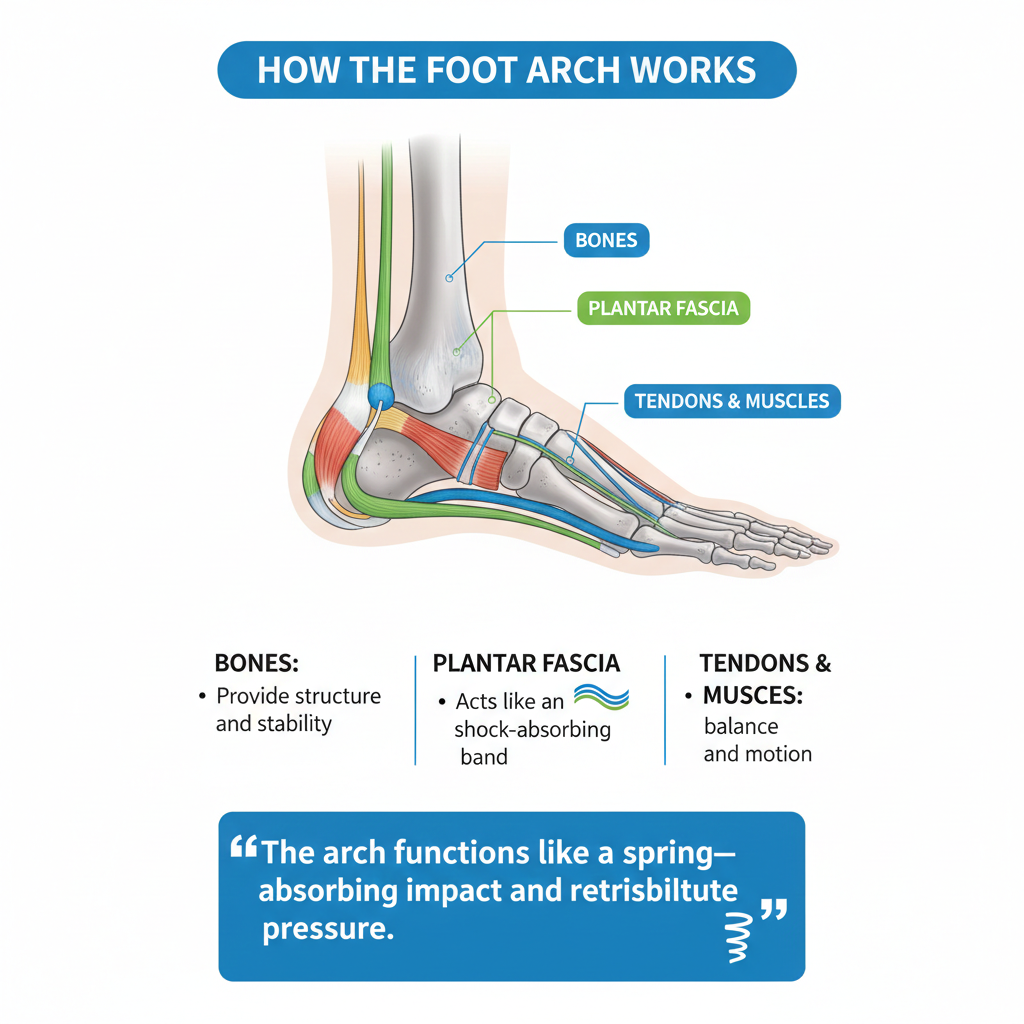
The arch is held up by the plantar fascia (a band running from the heel to the ball of the foot) and the posterior tibial tendon along the inner ankle. When either is overloaded, the result is arch pain — most often from plantar fasciitis or posterior tibial tendon dysfunction (Cleveland Clinic).
The most common causes of arch pain
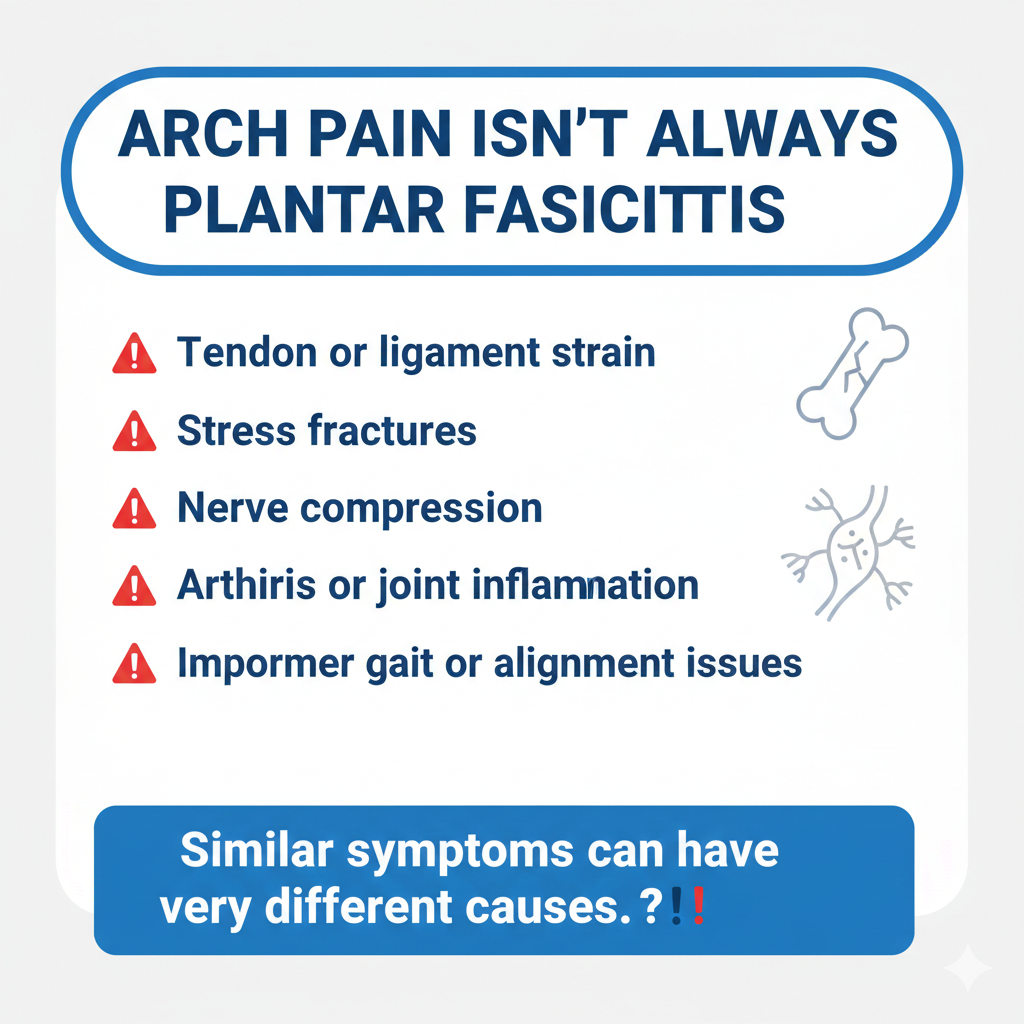
Most arch pain traces back to one of a handful of causes. Plantar fasciitis is the most common, followed by posterior tibial tendon dysfunction, flat feet, and high arches. The table below shows how the two leading causes differ, which is often enough to point you in the right direction.
| Plantar fasciitis | Posterior tibial tendon dysfunction (PTTD) |
|---|---|
| Pain runs from the heel into the arch; worst with the first steps in the morning or after rest, then eases after a few minutes of walking | Pain and tenderness along the inner arch and inner ankle; the arch may slowly flatten and the ankle roll inward over time |
| Often linked to standing all day, running, hard surfaces, or unsupportive shoes | Comes from repetitive strain that wears down the tendon supporting the arch |
Sources: Cleveland Clinic — Plantar Fasciitis; Cleveland Clinic — PTTD.
Your foot shape matters too. Both flat feet and high arches change how force spreads across the arch and can make the plantar fascia more likely to flare (Cleveland Clinic). Weight plays a role as well — gaining more than 15 pounds over a few months is a known trigger. If you’d like a broader look at foot problems beyond the arch, our foot pain overview covers the full picture.
Plantar fasciitis is the most common cause of arch pain and is often driven by time on your feet, hard surfaces, unsupportive shoes, flat feet or high arches, and recent weight gain (Cleveland Clinic). Pain focused on the inner arch that comes with a slowly flattening foot points more toward posterior tibial tendon dysfunction.
Sharp, burning, or sudden: what your pain pattern means
The way your arch pain behaves is a useful clue. Pain that’s sharp with your first steps and fades as you move is the classic plantar fasciitis pattern — it tends to hurt more after activity than during it (AAOS OrthoInfo). A burning or tingling that shoots through the arch can instead point to a compressed nerve. And pain that comes on all of a sudden after a specific misstep or landing is worth having checked, since it can signal a strain or tear rather than a gradual overuse injury.
A hallmark of plantar fasciitis is “pain with the first few steps after getting out of bed in the morning, or after a long period of rest” that eases after a few minutes, with “greater pain after (not during) exercise or activity” (AAOS OrthoInfo).
How to relieve arch pain at home
Most arch pain responds to simple, consistent care you can start today: rest from the activity that aggravates it, ice the sore area for about 10 to 15 minutes twice a day, wear supportive shoes, and add an over-the-counter arch support or orthotic. Gentle calf and plantar-fascia stretching helps, and an over-the-counter anti-inflammatory can ease a flare (Cleveland Clinic). Give these steps a couple of weeks of steady effort before judging whether they’re working.
What you don’t want to do is push through sharp pain or go back to hard training too soon — that’s how a short-lived flare turns into a months-long problem. Consistency beats intensity here.
When to see a doctor about foot arch pain
See a specialist if the arch pain doesn’t start improving within a week or two of home care, or sooner if it’s severe (Cleveland Clinic). Get seen promptly for sudden severe pain, an inability to put weight on the foot, numbness or tingling, or redness, warmth, and swelling that could point to infection. Pain that’s steadily flattening your arch also deserves a professional look, because catching a failing tendon early keeps treatment simpler.
Don’t wait if you have
Sudden severe arch or foot pain, an inability to bear weight, numbness or tingling in the foot, or signs of infection (spreading redness, warmth, fever). These need prompt medical attention rather than more home care.
How specialists treat arch pain
The outlook for arch pain is genuinely reassuring: more than 90% of people with plantar fasciitis improve within about 10 months of starting simple treatment (AAOS OrthoInfo). At Empire Minimally Invasive Spine and Pain, we work from the least invasive option upward — confirm the cause, then start with supportive footwear, custom orthotics, targeted stretching, and physical therapy. If pain hangs on, options like a corticosteroid injection or shockwave therapy may be added, and for stubborn cases some patients are candidates for regenerative options such as PRP therapy (Cleveland Clinic).
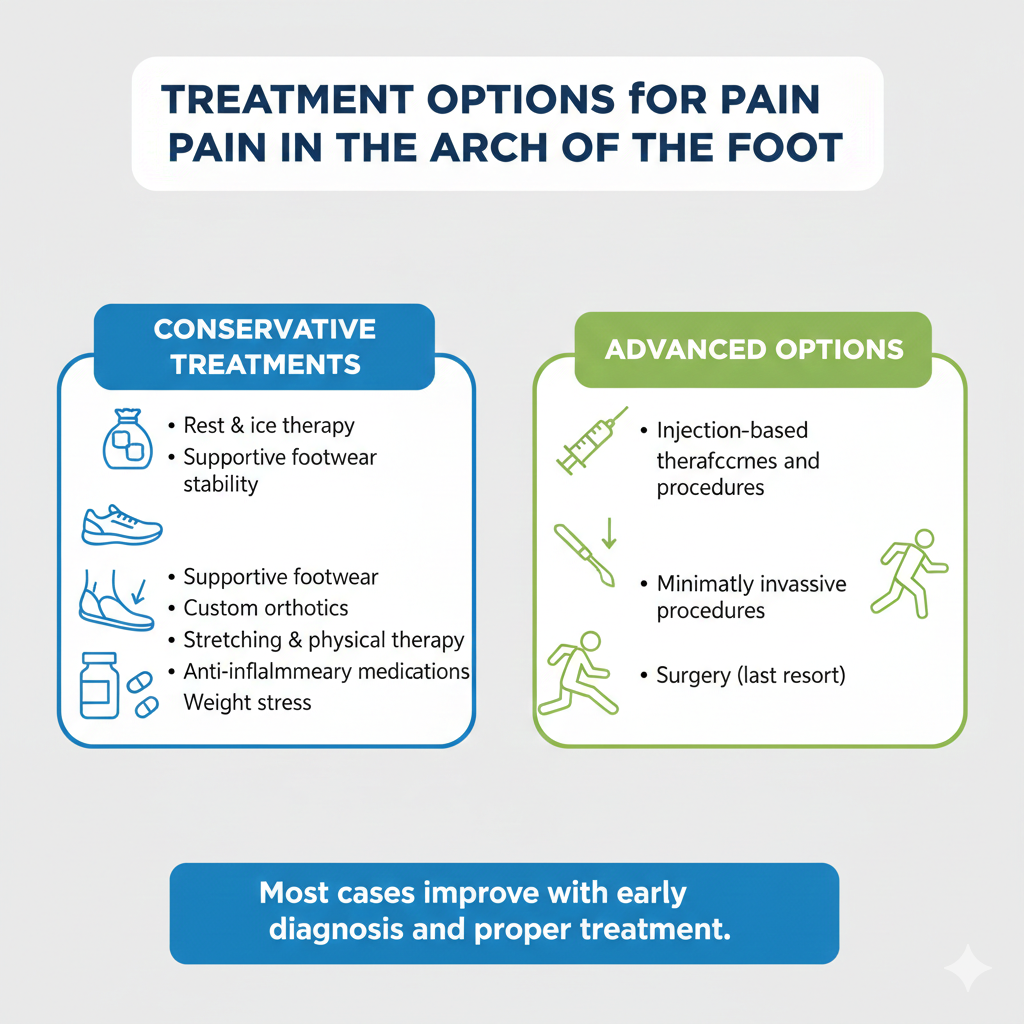
Surgery is uncommon and comes last. For plantar fasciitis it’s “generally saved for people who have not seen improvement after 12 months of aggressive nonsurgical treatment” (AAOS OrthoInfo). A posterior tibial tendon problem often takes about three to four months to settle with conservative care, and catching it early makes that far more likely (Cleveland Clinic).
More than 90% of people with plantar fasciitis improve within about 10 months of simple treatment, and surgery is generally reserved for the rare cases that haven’t responded after 12 months of aggressive nonsurgical care (AAOS OrthoInfo).
Frequently asked questions
Why does the arch of my foot hurt all of a sudden?
A sudden flare often follows a spike in activity, a long day on hard floors, or a switch to unsupportive shoes, which irritates the plantar fascia. Pain that appears instantly after a specific misstep or landing is different and worth having checked, since it can mean a strain or tear rather than gradual overuse.
What does arch pain from plantar fasciitis feel like?
It’s usually sharpest with your first steps in the morning or after sitting a while, then eases after a few minutes of walking, and tends to ache more after activity than during it (AAOS OrthoInfo).
Why does the inner side of my arch hurt?
Pain focused on the inner arch and inner ankle, sometimes with swelling and a slowly flattening arch, often points to posterior tibial tendon dysfunction — a wearing-down of the tendon that holds your arch up (Cleveland Clinic). It’s worth an early evaluation.
How long does arch pain take to go away?
With steady home care, many flares settle within a few weeks to a few months (Cleveland Clinic). Stubborn plantar fasciitis can take longer, though most people are better within about 10 months of simple treatment.
Should I keep walking or exercising with arch pain?
Gentle movement is fine, but ease off the activity that sparks the sharp pain and avoid hard surfaces and worn-out shoes. Pushing through significant pain tends to prolong the problem rather than build through it.
Can flat feet or high arches cause arch pain?
Yes. Both change how force is distributed across the foot and can make the plantar fascia more prone to irritation (Cleveland Clinic). Supportive shoes and orthotics are often especially helpful in these cases.
Still limping after a couple of weeks? Let’s find the cause.
If arch pain isn’t improving with home care, Empire Minimally Invasive Spine and Pain can pinpoint what’s driving it and build a plan that starts with the least invasive options. Call 516-229-1443 (New York) or 732-630-7246 (New Jersey), book an appointment online, or explore our foot pain treatment options to take the next step.
Find your nearest Empire office
We treat foot and arch pain at six offices across New York and New Jersey. Choose the location closest to you:
New Jersey — call 732-630-7246
About the author
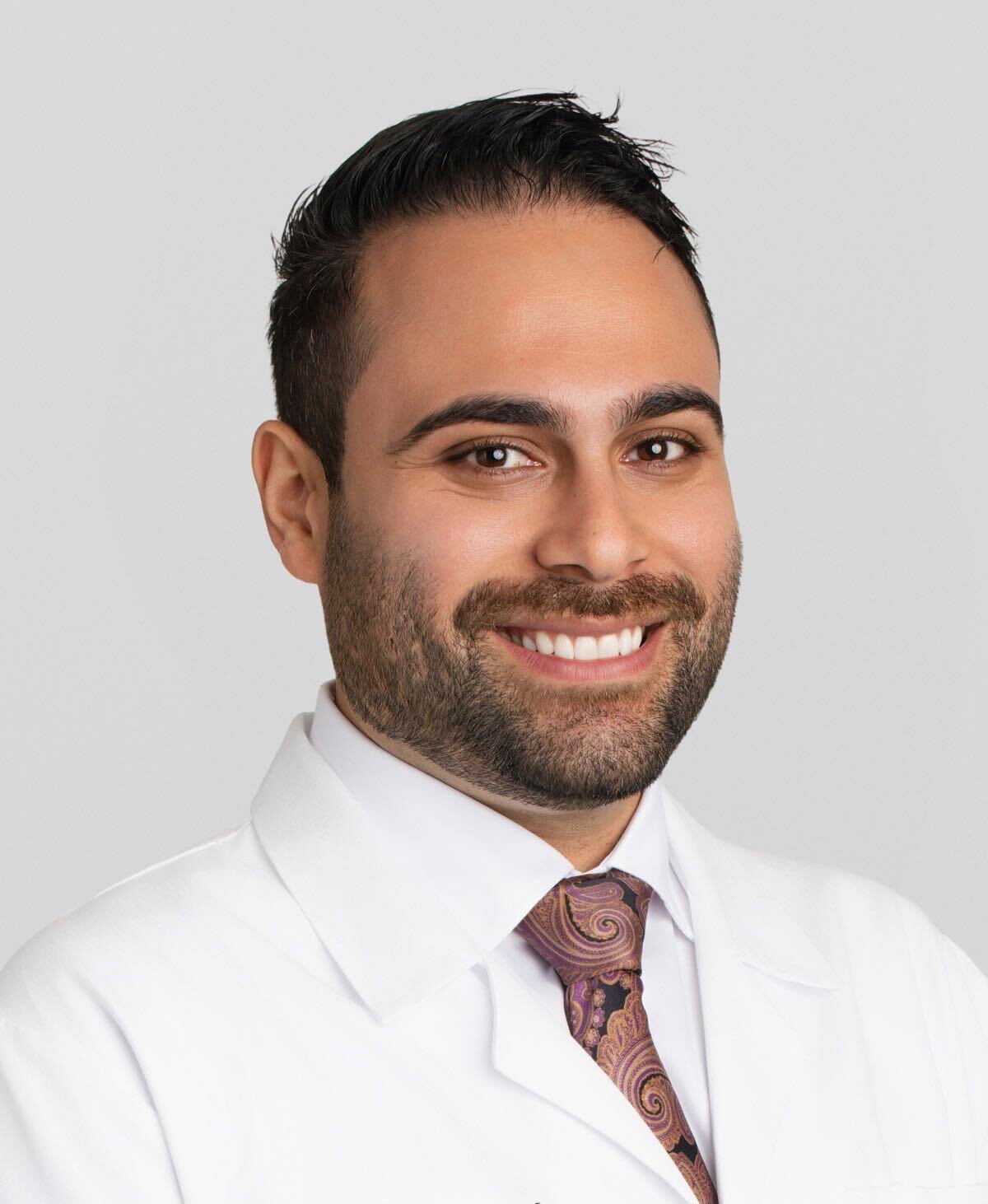
This article was written for patients of Empire Minimally Invasive Spine and Pain and is bylined by Dr. James Yu, a board-certified interventional pain management physician on Empire’s team. Empire is a combined pain management and orthopedic practice serving New York and New Jersey, treating foot and arch pain with the least invasive approach that resolves the problem.
This article is for general education and isn’t a substitute for personal medical advice. Talk with a qualified clinician about your specific symptoms and treatment options.
Sources
- Cleveland Clinic — Plantar Fasciitis
- Cleveland Clinic — Posterior Tibial Tendon Dysfunction
- AAOS OrthoInfo — Plantar Fasciitis and Bone Spurs
What Our Patients Say

Dr. James Yu
Articles: 11
Our Plainview office has moved
Find us at our new location:
520 Old Country Rd
Plainview, NY 11803
Same doctors, same phone numbers.
Most Major Plans,
No-Fault & Personal Injury.
We accept most major insurance plans across our New York and New Jersey offices. Select your state to see accepted plans.
Accepted at our New York Locations
Workers' Compensation
No-Fault (NY & NJ)
Lien Cases
Medicare
Empire BCBS
BCBS / Anthem
Cigna
Aetna
Empire NYSHIP
Oxford (PPO)
United Health Care
GHI / Emblem Health
Humana (PPO)
Magnacare (PPO)
Northwell Direct
1199 SEIU
Self Pay
Accepted at our New Jersey Locations
No-Fault (NJ)
Lien Cases
Horizon BCBS
Empire NYSHIP
BCBS / Anthem (PPO)
Cigna
Aetna (PPO)
GHI / Emblem (PPO)
Port Authority UHC
Verizon Plan
Carpenter & Trade Unions
Self Pay
Medicare, Medicaid and Workers' Compensation are not accepted at our New Jersey locations. Not sure about your plan? Call us and we'll verify before your visit.
Not sure about your plan?
Call Us — 516-229-1443
Verify Your Coverage for FREE
Enter your information and our team will confirm your benefits before your visit.
✓ HIPAA Compliant
✓ No Obligation
✓ Same-Day Response
Your information is encrypted and secure. By submitting, you consent to receive communications regarding your appointment. You may opt out at any time.
Meet Our Pain Management & Orthopedic Specialists
Board-certified physicians dedicated to accurate diagnosis and minimally invasive care.

Pain Management
John Akhnoukh, M.D.
Board Certified Anesthesiologist & Interventional Pain Management Physician
Visit Profile



Pain Management
James Yu, D.O.
Board Certified Anesthesiologist & Interventional Pain Management Physician
Visit Profile
Pain Management
Benjamin Souferi, D.O.
Fellowship-Trained Interventional Pain Medicine Physician (Cleveland Clinic)
Visit ProfilePain Conditions Affecting Daily Life
Improve your quality of life with our comprehensive approach to pain management
We are dedicated to finding individualized treatment options tailored to fit your needs. Our team is dedicated to helping you lead a productive and active life, free from pain and disruption.
Our Locations
Pain management and orthopedic care across New York and New Jersey.