How to Heal a Bulging Disc Naturally: What Works (and When It Won’t)
Most bulging discs get better on their own with simple, at-home care. Cleveland Clinic notes that about 9 out of 10 people with a bulging or herniated disc improve without surgery, usually within four to six weeks. “Healing naturally” mostly means calming the inflammation around the nerve and keeping your spine moving safely while the disc settles. This guide gives you a step-by-step plan, separates what actually works from the myths, and shows the warning signs that mean natural care isn’t enough.
Key takeaways
- About 9 in 10 bulging/herniated discs improve without surgery, often within 4–6 weeks (Cleveland Clinic).
- The winning formula is gentle movement, not bed rest — “motion is lotion.”
- Walking, heat, good posture, and physical therapy do most of the work.
- Avoid heavy lifting, bending-and-twisting, and long periods of sitting while you heal.
- Loss of bladder or bowel control, or spreading weakness/numbness, is an emergency — get care now.
Can a bulging disc heal on its own?
For most people, yes. A bulging disc happens when the soft cushion between two spine bones pushes out of its normal space. It becomes painful mainly when it irritates a nearby nerve. Over time the body often reabsorbs part of the bulge and the inflammation calms down, so symptoms fade even if the disc never looks perfect on a scan. Cleveland Clinic reports that herniated and bulging discs get better on their own or with non-surgical care for about 9 out of 10 people. The goal of natural care is to support that process and stay comfortable while it happens.
How long does a bulging disc take to heal?
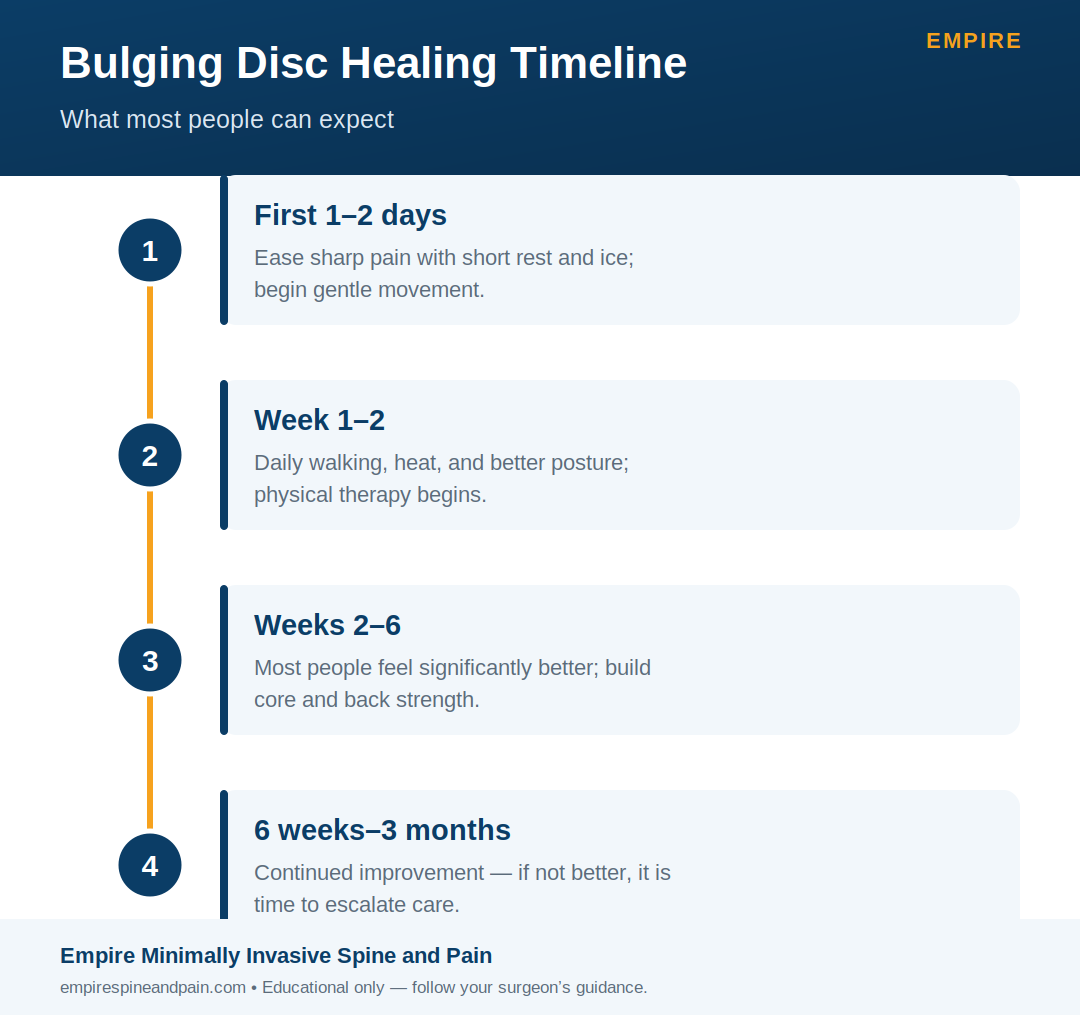
Most people start feeling better within a few weeks. Cleveland Clinic notes you will probably feel better within a month, and many cases settle within four to six weeks with conservative care. Some take a few months, especially if the nerve was very irritated. The pattern to expect is steady, gradual improvement — not a straight line.
Your step-by-step natural plan
Think of this as a ladder: start with the gentlest steps and build up as you feel better.
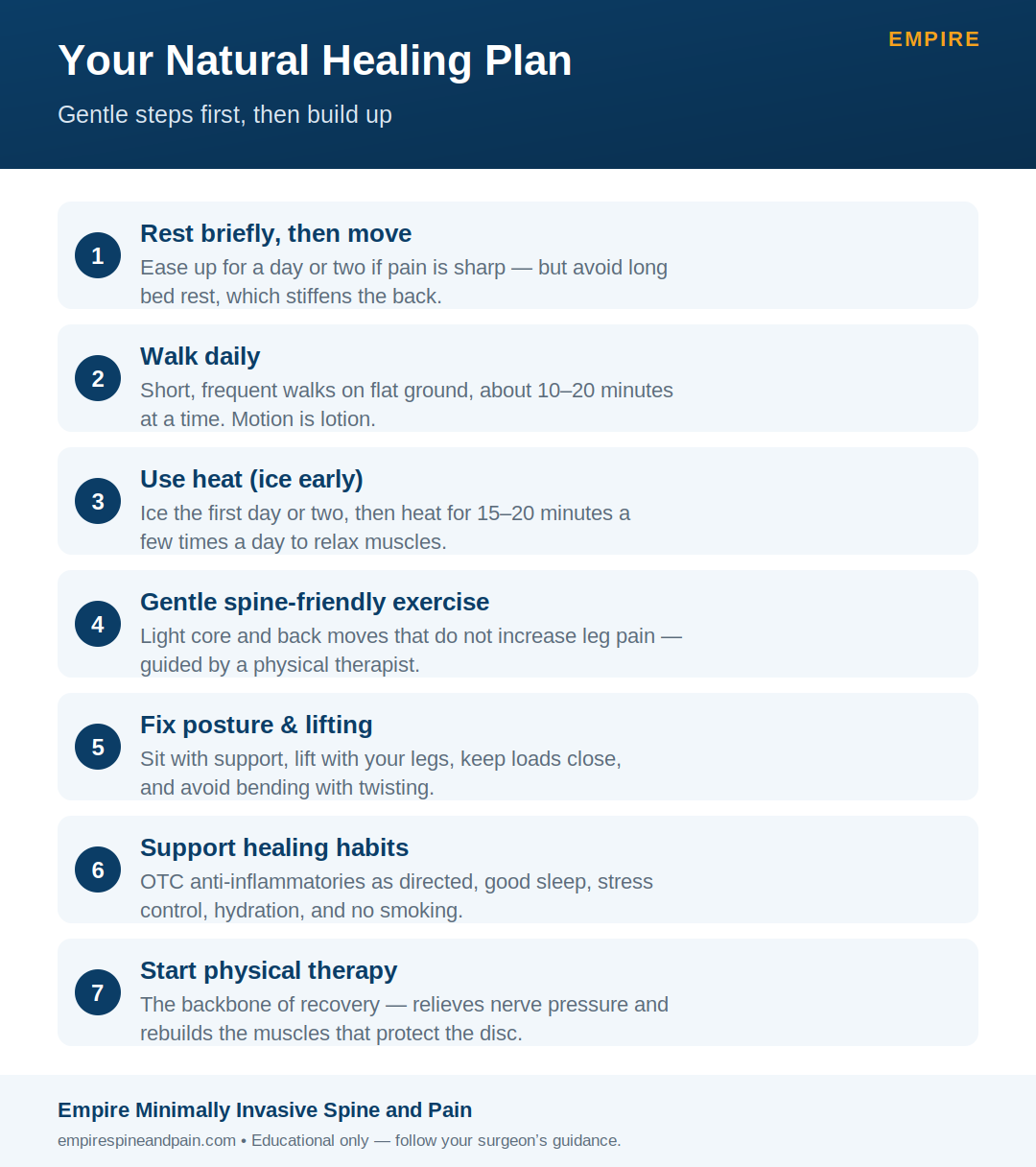
- Rest briefly, then move. Take it easy for the first day or two if pain is sharp, but avoid long bed rest — it stiffens the back and slows healing. Uncomfortable movement doesn’t mean you’re doing damage.
- Walk daily. Short, frequent walks on flat ground — around 10–20 minutes every few hours — keep the spine nourished and mobile. “Motion is lotion.”
- Use heat (and ice early). Ice can help in the first day or two; after that, heat for 15–20 minutes a few times a day relaxes muscles and eases pain.
- Do gentle, spine-friendly exercises. Light core and back exercises help — but they should not increase pain shooting down your leg. A physical therapist can pick the right ones for you.
- Fix your posture and body mechanics. Sit with support, stand tall, and lift with your legs while keeping the load close and your back straight. Avoid bending and twisting at the same time.
- Support healing habits. Over-the-counter anti-inflammatories (used as directed), good sleep, stress management, staying hydrated, and not smoking all help your body calm inflammation.
- Start physical therapy. This is the backbone of recovery. A therapist relieves pressure on the nerve, rebuilds core and back strength, and teaches movement that protects the disc long-term.
What actually works vs. common myths
There is a lot of bad advice online. Here’s the honest version:
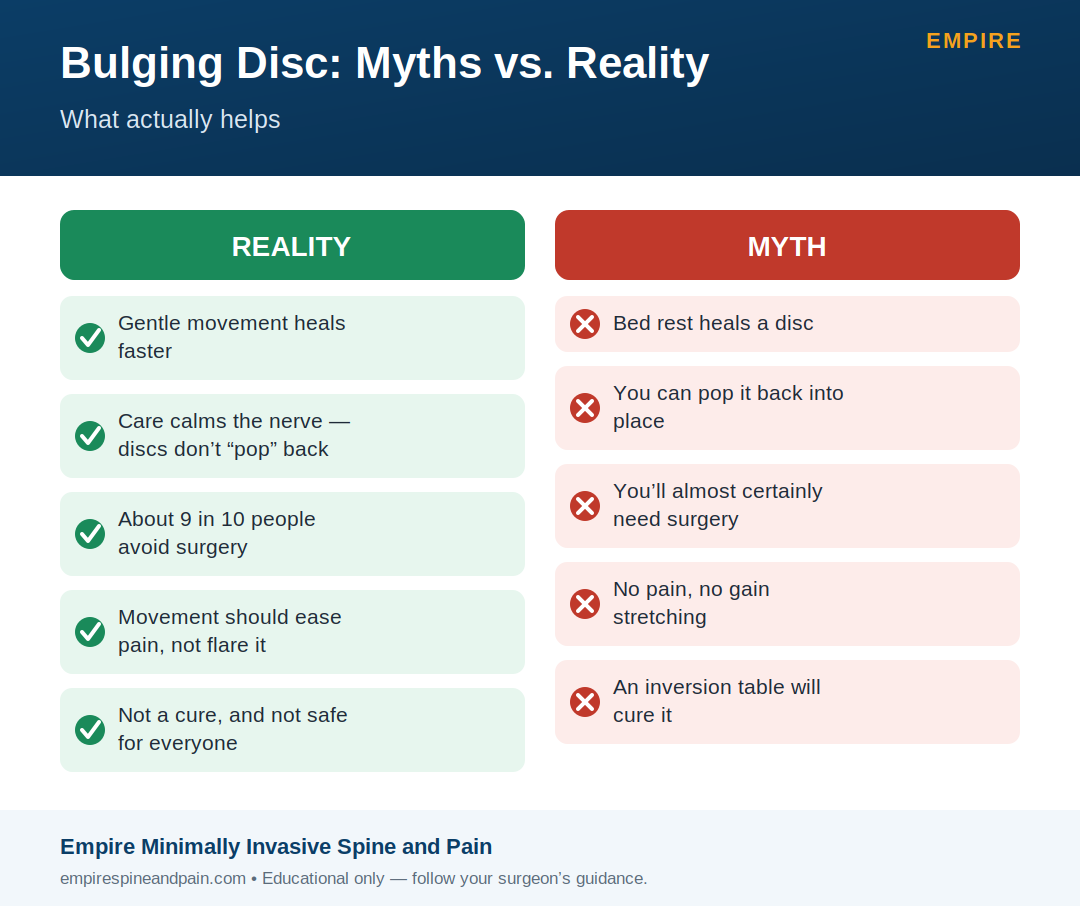
- Myth: bed rest heals a disc. Reality: more than a day or two of rest usually makes stiffness and pain worse. Gentle movement wins.
- Myth: you can “pop” the disc back into place. Reality: discs don’t snap back like that. What helps is reducing inflammation and pressure on the nerve.
- Myth: you’ll almost certainly need surgery. Reality: about 9 in 10 people improve without it.
- Myth: “no pain, no gain” stretching. Reality: stretches that increase leg pain can set you back. Movement should ease symptoms, not flare them.
- Myth: an inversion table will cure it. Reality: it may feel good briefly for some, but it’s not a cure and isn’t safe for everyone (for example, with high blood pressure or glaucoma). Check with your doctor first.
What to avoid with a bulging disc
While you heal, steer clear of the moves that push the disc against the nerve:
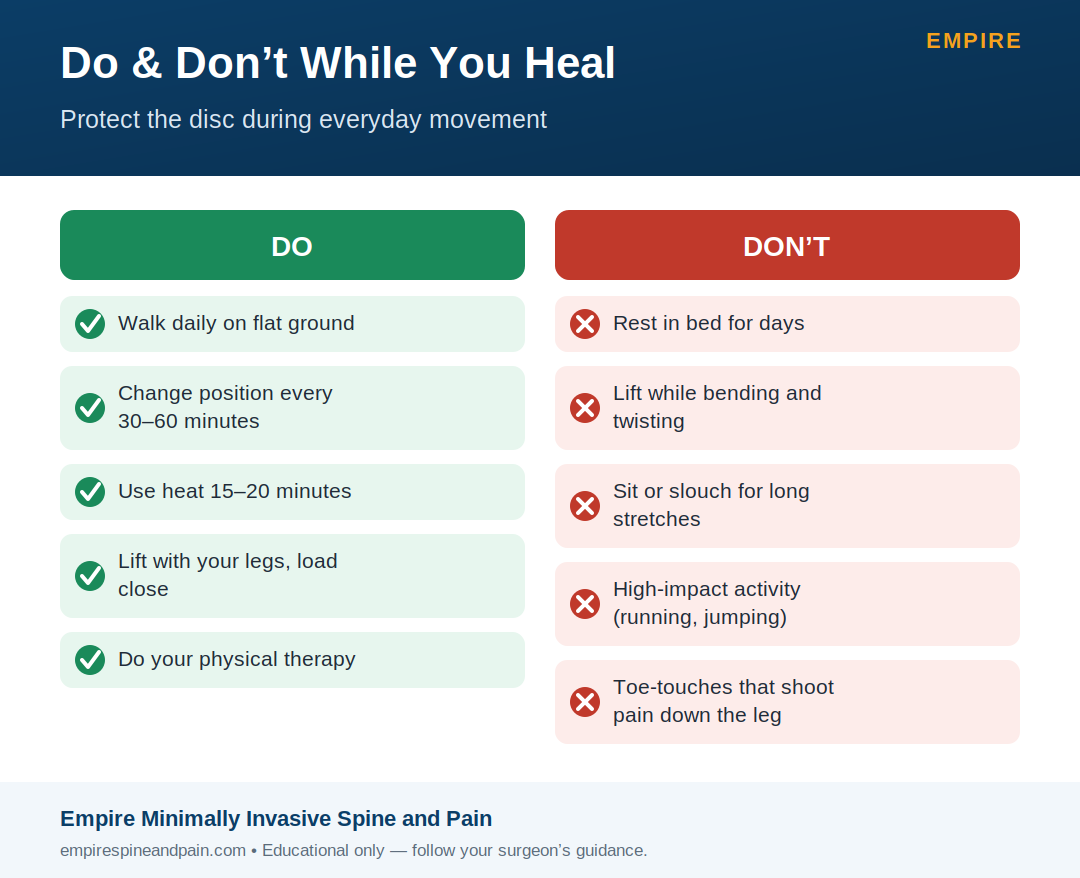
- Heavy lifting, especially lifting while bending and twisting.
- Long periods of sitting or slouching — get up and move every 30–60 minutes.
- High-impact activity (running, jumping) until pain settles.
- Deep forward bends and toe-touches that shoot pain down the leg.
- Powering through sharp or worsening nerve pain.
Is walking good for a bulging disc?
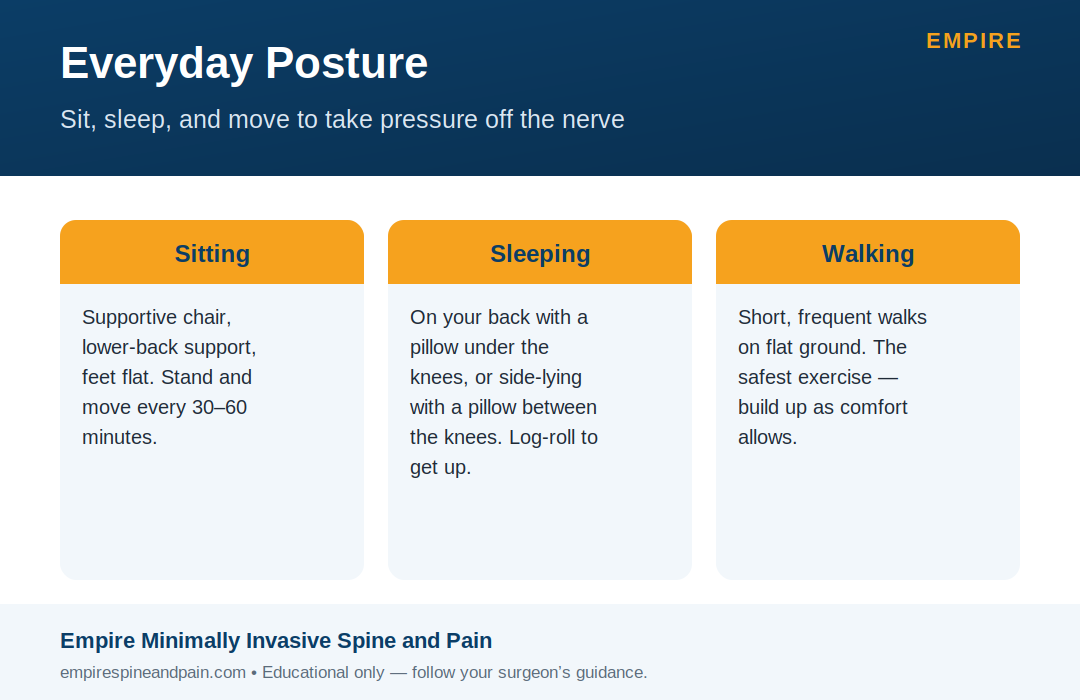
Yes — walking is one of the best and safest things you can do. It keeps the spine moving, boosts blood flow to help healing, and strengthens the muscles that support your back, all without jarring the disc. Start with short, frequent walks on flat ground and build up as comfort allows.
Sleeping and sitting to protect your disc
Small posture tweaks take pressure off the nerve all day and night. When sitting, use a chair with lower-back support and keep both feet flat. When sleeping, many people are most comfortable on their back with a pillow under the knees, or on their side with a pillow between the knees to keep the spine aligned. Roll your whole body as one unit when getting in and out of bed.
When natural care isn’t enough
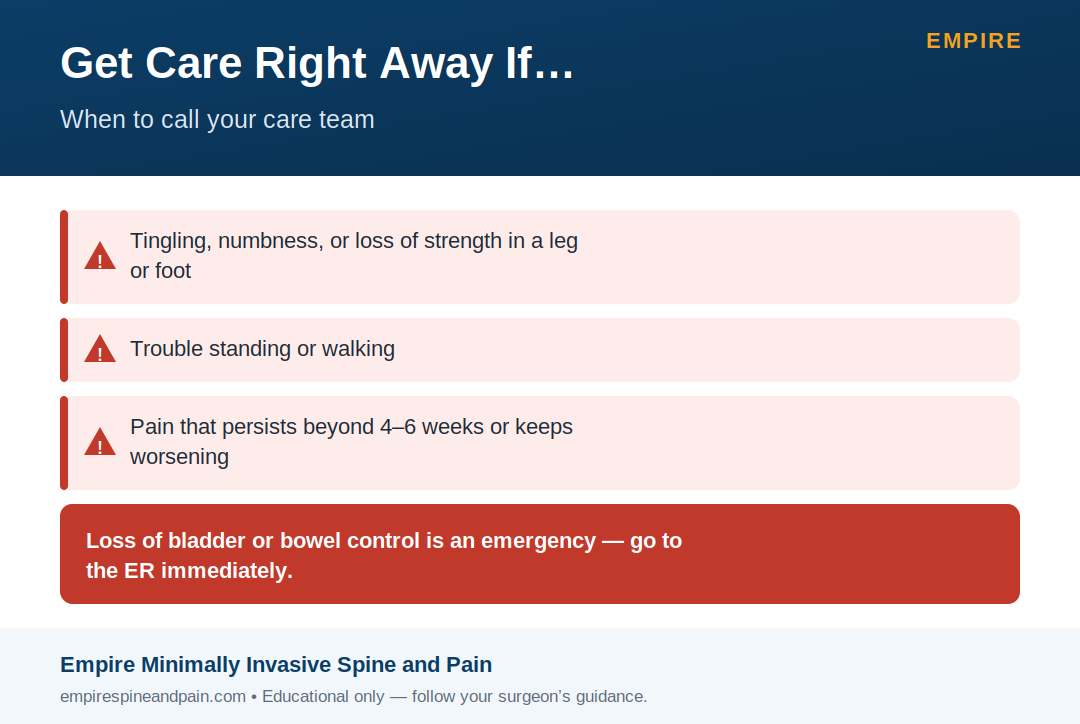
Natural care handles most bulging discs, but not all. Cleveland Clinic advises seeking care right away for loss of bladder or bowel control; tingling, numbness, or loss of strength in the arms, hands, legs, or feet; trouble standing or walking; or symptoms that persist beyond four to six weeks or keep getting worse. Loss of bladder or bowel control is an emergency — go to the ER.
If conservative care stalls, the next steps are still minimally invasive. At Empire Minimally Invasive Spine and Pain we follow a step-and-ladder approach — image-guided epidural steroid injections can calm a stubborn nerve, and for the right candidate an endoscopic discectomy removes the small piece of disc pressing on the nerve through a tiny incision. If you’re weighing your options, our back pain and sciatica resources walk through the full ladder, and our microdiscectomy recovery guide covers what surgery recovery looks like if it ever comes to that.
Frequently asked questions
Can a bulging disc heal on its own?
Usually, yes. About 9 out of 10 bulging or herniated discs improve without surgery as inflammation calms and the body reabsorbs part of the bulge. Gentle movement and good posture support that process.
How long does it take for a bulging disc to heal naturally?
Most people feel better within a month, and many settle within four to six weeks with conservative care. Some cases take a few months, especially if the nerve was very irritated.
What should you not do with a bulging disc?
Avoid heavy lifting, bending combined with twisting, long periods of sitting, high-impact activity, and deep stretches that shoot pain down the leg. Also skip extended bed rest.
Is walking good for a bulging disc?
Yes. Short, frequent walks on flat ground keep the spine mobile, improve blood flow, and strengthen supporting muscles without jarring the disc.
Can a bulging disc get worse?
It can if it’s repeatedly stressed by heavy lifting, poor posture, or a new injury. Watch for spreading numbness or weakness, and get urgent care for any loss of bladder or bowel control.
This article is for general education and is not a substitute for personal medical advice. If you have severe or worsening symptoms, see a clinician. Sources: Cleveland Clinic (Herniated Disk) and HealthPartners (natural herniated-disc care).
What Our Patients Say

Dr. James Yu
Articles: 11

Medicare, Workers Comp,
No Fault & Others.
We accept most major insurance plans across our New York and New Jersey offices. Select your state to see accepted plans.
Accepted at our New York Locations
Workers' Compensation
No-Fault (NY & NJ)
Lien Cases
Medicare
Empire BCBS
BCBS / Anthem
Cigna
Aetna
Empire NYSHIP
Oxford (PPO)
United Health Care
GHI / Emblem Health
Humana (PPO)
Magnacare (PPO)
Northwell Direct
1199 SEIU
Self Pay
Accepted at our New Jersey Locations
Workers' Compensation
No-Fault (NJ)
Lien Cases
Horizon BCBS
Empire NYSHIP
BCBS / Anthem (PPO)
Cigna
Aetna (PPO)
GHI / Emblem (PPO)
Port Authority UHC
Verizon Plan
Carpenter & Trade Unions
Self Pay
Medicare and Medicaid are not accepted at our New Jersey locations. Not sure about your plan? Call us and we'll verify before your visit.
Not sure about your plan?
Call Us — 516-229-1443
Verify Your Coverage for FREE
Enter your information and our team will confirm your benefits before your visit.
✓ HIPAA Compliant
✓ No Obligation
✓ Same-Day Response
Your information is encrypted and secure. By submitting, you consent to receive communications regarding your appointment. You may opt out at any time.
Meet Our Pain Management & Orthopedic Specialists
Board-certified physicians dedicated to accurate diagnosis and minimally invasive care.

Pain Management
John Akhnoukh, M.D.
Board Certified Anesthesiologist & Interventional Pain Management Physician
Visit Profile



Pain Management
James Yu, D.O.
Board Certified Anesthesiologist & Interventional Pain Management Physician
Visit Profile

Pain Management
Benjamin Souferi, D.O.
Fellowship-Trained Interventional Pain Medicine Physician (Cleveland Clinic)
Visit ProfilePain Conditions Affecting Daily Life
Improve your quality of life with our comprehensive approach to pain management
We are dedicated to finding individualized treatment options tailored to fit your needs. Our team is dedicated to helping you lead a productive and active life, free from pain and disruption.
Our Locations
Pain management and orthopedic care across New York and New Jersey.